When Bangkok Flooded – What “Venice of the East” Felt Like
What the September 2026 floods revealed about Bangkok’s rainy season, its old canal city, and the way everyday life changes when the water rises.
By Arthit Juyaso (Bingo)
Principal and Curriculum Developer at Duke Language School
Author of Read Thai in 10 Days
Bangkok’s rainy season normally runs from around the middle of May to the middle of October. That does not mean the city spends five months underwater. Most rainy-season days are simply wet. Serious flooding tends to happen when particularly heavy rain overwhelms drainage in certain areas, sometimes after several days of accumulated rainfall.
The important thing to understand is that Bangkok does not flood evenly.
One neighbourhood may have deep standing water while another part of the city is functioning almost normally. A main road may reopen while nearby sois remain difficult or impossible for small cars. Even within the same neighbourhood, a condo lobby can be completely dry while the road outside is not.
The flooding of late September 2026 demonstrated this unusually clearly. By the morning of 28 September, Bangkok authorities reported that around 329,000 households, representing roughly 700,000 people, had been affected. Some parts of the city were already recovering while serious flooding continued elsewhere.
For anyone who lives in Bangkok, the lesson is familiar. When the rain becomes serious, asking whether “Bangkok is flooded” is not particularly useful. The better question is: Which road? Which neighbourhood? Which morning? And what kind of vehicle are you driving?
When is Bangkok’s rainy season?
Thailand’s rainy season, ฤดูฝน (rʉ́duu fǒn), usually begins around the middle of May as the southwest monsoon becomes established and continues until roughly the middle of October in Bangkok and much of the country.
The Thai Meteorological Department recorded the beginning of the 2026 rainy season on 15 May. September therefore falls well inside Bangkok’s wet season, when heavy afternoon and evening rain is hardly unusual.
What causes problems is not simply the fact that it rains.
Bangkok becomes more vulnerable when large amounts of rain fall in a short period, or when repeated storms leave canals, drains and pumping systems struggling to move the water away quickly enough.
That distinction matters because rainy season and flooding are not the same thing. Bangkok can experience frequent rain without widespread disruption. Serious flooding is much more local.
Instead of asking, “Does Bangkok flood during rainy season?”, it is usually more useful to ask what is happening on the particular road or soi you need to use.
September 2026: One City, Very Different Conditions
The late-September floods followed several days of intense rain. By 28 September, Bangkok Governor Chadchart Sittipunt said some parts of the capital had received more than 300 millimetres of accumulated rainfall over the previous two to three days.
Conditions varied sharply across the city.
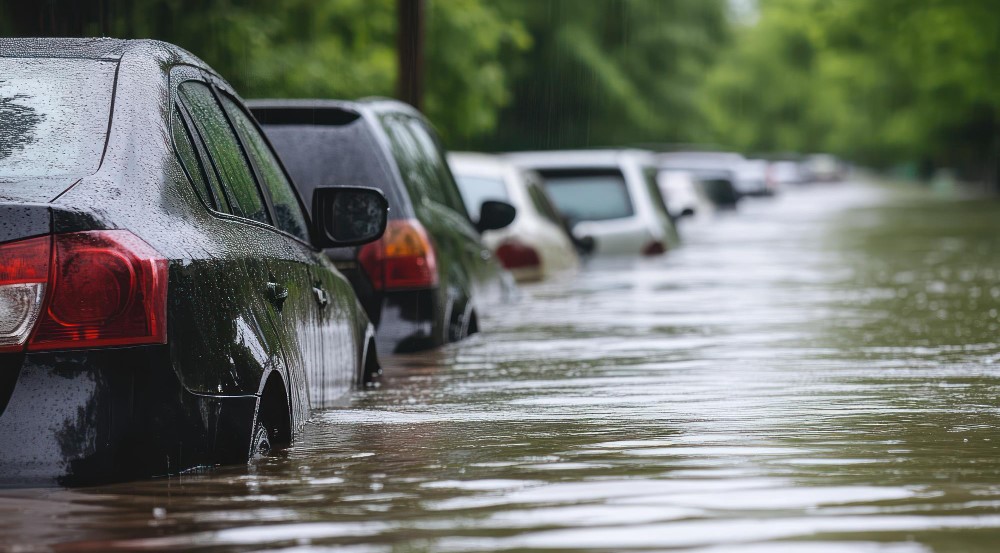
Khlong Chan Flats in Bang Kapi were among the badly affected areas. Floodwater around the housing estate was reported at around 1.5 metres on 27 September, and residents experienced problems with electricity, running water and access to food.
Elsewhere, recovery had already begun.
On the morning of 28 September, Vibhavadi Rangsit Road had become passable again. Bang Kapi was a different story. Water around the intersection remained high enough for authorities to warn small cars away.
Same city. Same morning. Completely different experience.
That is why photographs of one flooded Bangkok road can be misleading when used to describe the entire capital. The photograph may be completely accurate, but it tells you what happened in that place at that particular time.
It does not tell you what Bangkok looked like everywhere else.
Why is Bangkok Called the “Venice of the East”?
The nickname makes much more sense when you look at how Bangkok developed.
For much of its history, the city depended far more heavily on waterways than modern Bangkok suggests. คลอง (klɔɔng), or canals, were not decorative additions to the city. They were used for transport, trade, settlement, agriculture and drainage.
Bangkok was, in a very real sense, a water city.
From the late nineteenth century onward, that began to change. Roads became increasingly important, the city expanded, and many waterways were altered, reduced or filled as Bangkok developed into the road-based metropolis we know today.
That history is the real background to the phrase “Venice of the East.”
It is better understood as a description of how Bangkok once functioned than as a romantic tourism slogan about picturesque canals.
There is also an important qualification. It would be too simple to say Bangkok floods today because canals were filled in.
The city’s flood vulnerability is shaped by several things at once, including low-lying geography, intense rainfall, drainage capacity, urban development, waterways and long-term land subsidence.
The old canal city is part of the story.
It is not the whole story.
Why Can One Part of Bangkok Be Dry While Another Is Flooded?
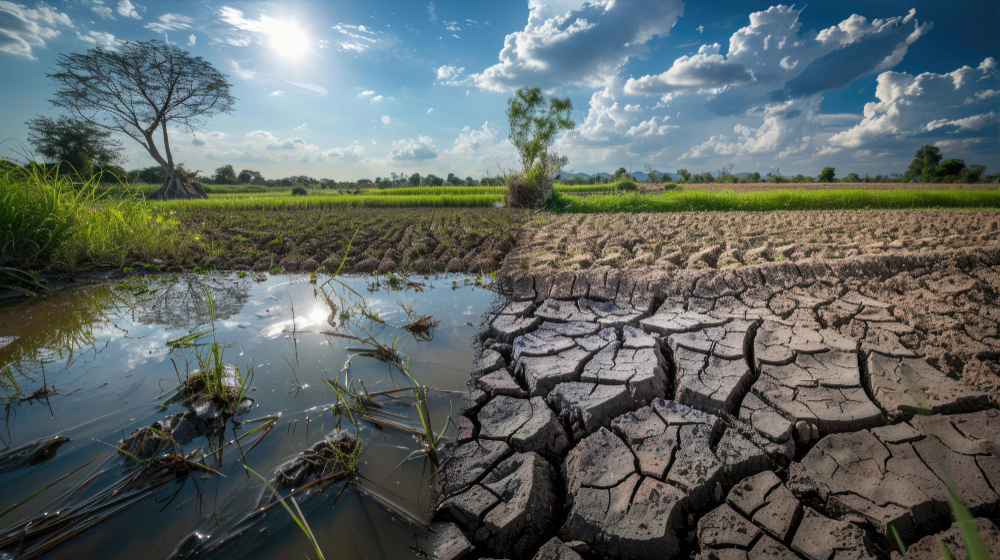
Bangkok is not a flat bathtub that fills evenly.
Rainfall itself varies across the city. Roads sit at different levels. Drainage capacity differs from one area to another. Canals rise and fall. Some roads clear relatively quickly after a storm, while water remains trapped elsewhere.
Vehicle type matters too.
A road can technically be open while still being unsuitable for a small car. That is why flood updates in Bangkok often distinguish between a road being passable and a road being safe for every vehicle.
The September 2026 floods provided a clear example. Some major roads were reopening while other areas remained difficult or impossible for smaller vehicles.
For anyone living in Bangkok, that leads to a very practical rule:
During serious flooding, route-specific information is more useful than citywide information.
Check the road you actually need. Then check it again before leaving.
What Flood Week Sounds Like in Thai
One of the interesting things about living through a week like this is hearing which Thai suddenly becomes useful.
Nobody needs a complicated grammar lesson when water is rising outside.
The useful questions are much simpler.
โอเคมั้ย (ookee mái)
Are you okay?
บ้านน้ำท่วมมั้ย (bâan náam-tûam mái)
Is your house flooded?
ไปทำงานไหวมั้ย (bpai tamngaan wǎi mái)
Can you manage to get to work?
ต้องการอะไรมั้ย (dtônggaan àrai mái)
Do you need anything?
มีน้ำดื่มมั้ย (mii náam-dʉ̀ʉm mái)
Do you have drinking water?
What is interesting is not only the vocabulary, but what these questions are doing socially.
They give the other person an easy way to answer. They check whether somebody is safe without demanding a long account of what happened. If help is needed, they leave the door open for the person to say so.
Sometimes that is all good communication needs to do.
When Plans Suddenly Have to Change
Flooding creates another very ordinary problem. People cannot get where they were supposed to go.
Meetings move. Classes are postponed. Staff work from home. Someone who fully intended to be somewhere at 9:00 suddenly looks outside and realises that getting there is simply not sensible.
Thai has several natural ways of dealing with that.
เลื่อน (lʉ̂an)
Postpone.
เลื่อนได้เลย (lʉ̂an dâai ləəi)
Go ahead and postpone it. That’s completely fine.
ไปไม่ไหว (bpai mâi wǎi)
I can’t manage to get there.
เดี๋ยวค่อยว่ากัน (dǐao kɔ̂i wâa gan)
Let’s sort it out later.
ไม่เป็นไรนะถ้าไปไม่ได้ (mâi bpenrai ná, tâa bpai mâi dâai)
It’s okay if you can’t make it.
These expressions are useful well beyond flood week.
They are also a good example of something learners gradually notice about everyday Thai. Good communication is not always about producing the longest or most impressive sentence. Sometimes the important skill is knowing how to make a change of plan clear without making the situation unnecessarily uncomfortable.
The Road Questions That Suddenly Matter
When the rain becomes serious, vague information stops being useful very quickly.
You want to know whether your particular route works.
เส้นนี้ผ่านได้มั้ย (sên níi pàan dâai mái)
Can you get through this route?
ถนนโล่งมั้ย (tanǒn lôong mái)
Is the road clear?
And one warning matters a great deal if you are driving:
รถเล็กผ่านไม่ได้ (rót lék pàan mâi dâai)
Small cars can’t get through.
That distinction comes up frequently during Bangkok flooding.
“The road is open” does not necessarily mean “your car should go down it.”
And when traffic is redirected around flooded areas, another familiar Bangkok phrase usually follows:
รถติด (rót dtìt)
Traffic jam.
The vocabulary is not glamorous. It is, however, extremely useful.
Does Living in a Condo Keep You Safe From Flooding?
It helps, but it does not make you immune to the disruption.
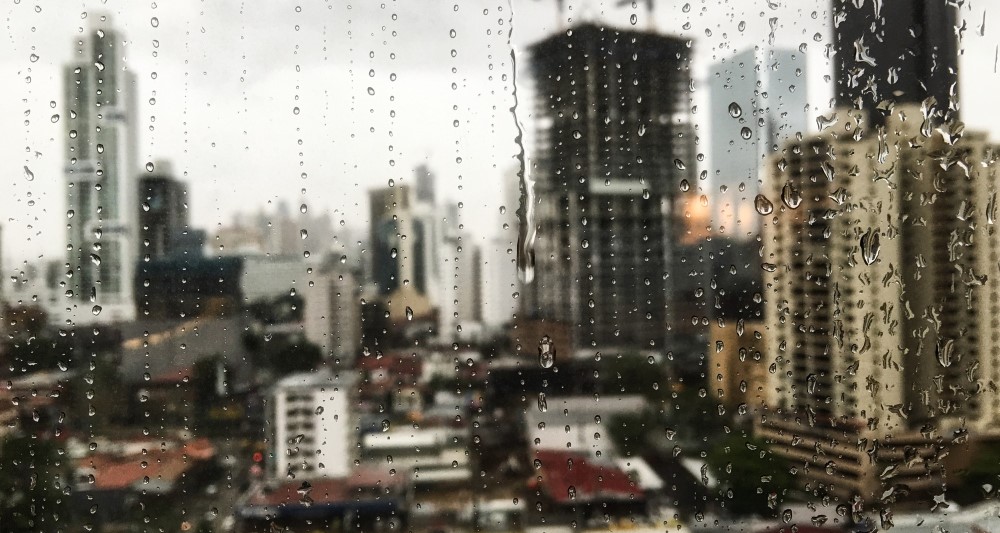
Someone living on the twentieth floor is obviously in a very different physical situation from somebody in a ground-floor home. But the building still depends on the streets around it.
Access roads can flood. Deliveries may stop. Ride-hailing drivers may refuse routes they consider unsafe. Electricity or running water can be interrupted. Ground-floor facilities can also be affected.
Khlong Chan Flats demonstrated the problem clearly in September 2026. Residents were above the floodwater inside the buildings, but high water around the estate still created major problems with access and essential services.
So the useful question is not simply:
“Is the building flooded?”
A better question is:
Can people still get in and out safely, and are the building’s basic services working?
Was September 2026 Another 2011?
Major flooding in Bangkok inevitably brings back memories of 2011.
That comparison is understandable. The 2011 floods were enormous, prolonged and traumatic for many people in Thailand.
But every serious flood should not automatically be described as “another 2011.”
The September 2026 event is better understood using the actual conditions of September 2026: how much rain fell, which districts were affected, which roads were closed, how quickly water receded, and how many households were affected.
Historical comparisons can provide context. They can also become misleading if they replace the details of the event happening in front of us.
The more useful lesson is smaller and more practical.
Do not judge Bangkok’s flood conditions from one photograph, one neighbourhood or one headline.
Find out what is happening where you actually need to go.
What “Venice of the East” Feels Like Now
The Bangkok behind the old nickname was a city organised around water.
Modern Bangkok is very different. Expressways, high-rises, shopping centres, trains and kilometres of roads now dominate the picture.
But during a week of serious rain, the relationship between Bangkok and water becomes difficult to ignore.
A road disappears under brown water. A canal rises. One neighbourhood becomes temporarily cut off while another carries on almost normally. People check LINE before leaving home to find out whether a particular route is still possible.
For a few days, the old nickname feels less like something from a travel book.
Not because Bangkok suddenly turns back into an Asian Venice, and certainly not because flooding is picturesque.
It feels relevant because water once again begins deciding how the city moves.
And when that happens, everyday life adapts around it.
People postpone things. Check on friends. Ask whether small cars can get through. Work from home. Wait for the pumps. Watch the rain radar. Try again tomorrow.
That may be closer to what “Venice of the East” feels like in modern Bangkok than any postcard ever was.
Frequently Asked Questions
Jump to a question:
- When is Bangkok’s rainy season?
- Does Bangkok flood throughout the rainy season?
- Does all of Bangkok flood at the same time?
- Why is Bangkok called the “Venice of the East”?
- Is Bangkok safe to visit during rainy season?
- What Thai phrases are useful during flooding?
- How serious were the September 2026 Bangkok floods?
When is Bangkok’s rainy season?
Bangkok’s rainy season normally runs from around mid-May to mid-October, although rainfall varies considerably within that period. September usually falls well inside the wet season.
Does Bangkok flood throughout the rainy season?
No. Rainy season does not mean continuous flooding. Serious standing water tends to occur during periods of particularly heavy rainfall or when drainage systems and waterways cannot remove water quickly enough.
Does all of Bangkok flood at the same time?
No. Flooding can vary significantly by district, road and individual soi. During the September 2026 floods, some major roads had reopened while other areas still had water deep enough to stop small vehicles.
Why is Bangkok called the “Venice of the East”?
The nickname comes from Bangkok’s historical network of canals and its former dependence on water transport. The city gradually became much more road-based from the late nineteenth century onward, and many waterways were altered or lost during that transformation.
Is Bangkok safe to visit during rainy season?
Rainy season does not normally stop everyday life across Bangkok. Conditions can, however, change quickly during severe storms. Visitors should check current weather warnings and route-specific flood information rather than assuming that conditions are the same throughout the city.
What Thai phrases are useful during flooding?
Useful expressions include โอเคมั้ย (ookee mái), “Are you okay?”, บ้านน้ำท่วมมั้ย (bâan náam-tûam mái), “Is your house flooded?”, ไปไม่ไหว (bpai mâi wǎi), “I can’t manage to get there”, and ถนนโล่งมั้ย (tanǒn lôong mái), “Is the road clear?”
How serious were the September 2026 Bangkok floods?
As of the morning of 28 September 2026, Bangkok authorities reported around 329,000 affected households, representing roughly 700,000 people. Some areas had received more than 300 millimetres of accumulated rainfall over the preceding two to three days, but conditions differed considerably across the city.
Sources & Further Reading
Thai Meteorological Department
Official information on Thailand’s seasons and the beginning of the 2026 rainy season.
Bangkok Metropolitan Administration / Royal Thai Government
Flood situation updates and affected-population figures for 28 September 2026.
Porphant Ouyyanont, “Physical and Economic Change in Bangkok, 1851–1925”
Research on Bangkok’s transformation from a water-oriented city toward a more road-based urban system.
Oxford Academic, research on subsidence and flooding in Bangkok
Background on Bangkok’s waterways, urban development, land subsidence and long-term flood vulnerability.
About the Author
Arthit Juyaso (Bingo) is the Principal and Curriculum Developer at Duke Language School. He is also a Thai language educator and the author of Read Thai in 10 Days.
Over the past two decades, he has helped thousands of learners from around the world develop practical, conversational Thai. His teaching approach focuses on clear explanations, real communication and giving learners enough structured practice to turn what they know into language they can actually use.