
Should You Learn Thai Before Retiring in Thailand?
Why language may be the smartest first step before choosing Thailand as your long-term home
By Arthit Juyaso (Bingo), Principal of Duke Language School, author of Read Thai in 10 Days
Thailand is one of the world’s most attractive retirement destinations, but living here is very different from visiting. A holiday can show you the beaches, food, weather, and hospitality. It cannot fully show you what daily life feels like when you need to speak to a landlord, explain a medical concern, solve a small problem at immigration, read a sign, ask for help, or build a real local routine.
At Duke Language School, we see this often. Through years of teaching foreign learners in Bangkok, including many retirees considering long-term life in Thailand, our team has noticed a clear pattern: students who make the effort to learn Thai usually feel more confident, more independent, and more connected to daily life here.
The clearest answer is this:
If you are thinking seriously about retiring in Thailand, learning Thai before or during your first long stay is one of the best investments you can make. It gives you independence, confidence, cultural understanding, and a more honest picture of whether Thailand is truly the right place for you.
You do not need to become fluent before moving. You do not need perfect tones. You do not need to read newspapers or understand every conversation. But even practical beginner Thai can change how Thailand feels. It turns daily life from guessing and pointing into participating.
For many future retirees, studying Thai in Thailand can also provide structure during the transition period. Some students may qualify for an Education Visa, commonly known as an ED visa, through a genuine course of study. However, an ED visa should be understood correctly: it is a study visa, not a retirement visa and not a shortcut around retirement visa rules.
Used properly, Thai study can help you do something more important than simply stay longer. It can help you decide whether you want to build a real life here.
Table of Contents
- Learn Thai Before You Commit to Retirement in Thailand
- Why a Long Test Period Is Better Than a Fast Retirement Decision
- Is an ED Visa a Good Option for People Considering Retirement in Thailand?
- ED Visa vs Retirement Visa: What Is the Difference?
- Why Learning Thai Changes the Retirement Experience
- Is Thai Too Difficult to Learn Later in Life?
- How Much Thai Do You Need Before Retiring in Thailand?
- Why Studying Thai in Thailand Is Different from Studying at Home
- What Future Retirees Should Test During a Long Stay in Thailand
- Where Duke Language School Fits Into This Journey
- Common Mistakes Future Retirees Make Before Moving to Thailand
- FAQ: Learning Thai Before Retiring in Thailand
- Final Takeaway
- About the Author
Learn Thai Before You Commit to Retirement in Thailand
Learning Thai before retiring in Thailand helps you test the country in a deeper and more realistic way.
Tourists often experience Thailand through hotels, restaurants, beaches, malls, tours, and English-speaking service staff. Long-term residents experience something broader. They deal with rental contracts, local neighborhoods, hospitals, transport, banks, repairs, official documents, cultural expectations, and everyday relationships.
Thai language ability helps with all of this.
A small amount of Thai can help you:
-
order food more confidently
-
explain what you need
-
understand prices and directions
-
speak politely with neighbors
-
ask simple questions at a clinic or pharmacy
-
build goodwill with local people
-
feel less dependent on translation apps
-
understand Thai culture from the inside, not just from the outside
The real value of learning Thai is not just vocabulary. It is access.
Thai language gives foreign residents access to the everyday Thailand that tourists rarely see.
Why a Long Test Period Is Better Than a Fast Retirement Decision
Retiring abroad is not just a financial decision. It is a lifestyle decision, a health decision, a social decision, and sometimes an identity decision.
Thailand can look perfect from a distance. The food is famous, the cost of living can be attractive, the weather is warm, and Thai people are often welcoming. But long-term life also includes humidity, traffic, bureaucracy, language barriers, cultural misunderstandings, different service expectations, and the emotional reality of being far from old routines.
That is why a slow test period is wise.
Instead of asking, “Can I retire in Thailand?” a better question is:
Can I live well in Thailand on an ordinary Tuesday?
The ordinary Tuesday test matters. Can you go to the market, get around the city, handle a small problem, speak to someone in your building, manage your health needs, and enjoy the rhythm of daily life when you are no longer in holiday mode?
A few weeks will not answer that. A longer stay gives you better evidence.
After several months, you begin to notice what daily life is really like. You learn whether the climate suits you. You discover your actual monthly budget. You find out whether you prefer Bangkok, Chiang Mai, Hua Hin, Pattaya, Phuket, or a quieter province. You learn whether you enjoy the pace of life. You also discover how much the language barrier affects your confidence.
This is where Thai study becomes especially useful. It gives your test period structure, purpose, and progress.
Is an ED Visa a Good Option for People Considering Retirement in Thailand?
An ED visa can be useful for some people who genuinely want to study Thai while spending an extended period in Thailand. But it should be presented accurately.
An ED visa is for education. It is not a retirement visa, and it should not be treated as a loophole or substitute for one.
For someone considering long-term life in Thailand, a Thai language course may serve two purposes at the same time. First, it helps the person learn practical Thai. Second, if the student qualifies and follows the rules, it may support a legal study-based stay in Thailand.
That distinction matters.
The goal should not be “use school to stay in Thailand.” The goal should be “study Thai seriously while discovering whether Thailand is the right long-term home.”
Visa requirements can differ by nationality, embassy, consulate, timing, and personal circumstances. Students should always check the latest requirements with the relevant Thai embassy, consulate, or immigration authority before making decisions.
ED Visa vs Retirement Visa: What Is the Difference?
An ED visa and a retirement visa are designed for different purposes.
An ED visa is for people who are studying, training, or joining an educational program in Thailand. In the context of Thai language learning, it is normally connected to enrollment in a recognized course. Students are expected to attend classes and follow visa conditions.
A retirement visa is for people who meet retirement-related requirements, usually including age and financial criteria. These requirements can vary depending on visa type, nationality, embassy, consulate, and current Thai government regulations.
The practical difference is simple:
An ED visa is based on genuine study. A retirement visa is based on retirement eligibility. They are not the same thing.
For future retirees, studying Thai can be a smart preparation step. But the retirement decision should still be made with the correct visa pathway in mind.

Why Learning Thai Changes the Retirement Experience
Many foreigners can live in Thailand without speaking Thai, especially in Bangkok, Chiang Mai, Pattaya, Phuket, and other areas with large international communities. But “can survive” and “can belong” are very different things.
Thai changes the experience in five important ways.
1. Thai Gives You Daily Independence
Without Thai, many simple tasks require help. You may rely on a partner, friend, staff member, agent, translation app, or English-speaking service provider.
With basic Thai, daily life becomes easier. You can ask where something is. You can check a price. You can explain a simple problem. You can understand common instructions. You can recognize useful words on signs, menus, bills, and forms.
This does not mean you will handle everything alone. But it reduces the feeling of helplessness.
For long-term residents, practical Thai is not about sounding impressive. It is about needing less help for ordinary life.
2. Thai Helps You Build Better Relationships
Thailand is a relationship-based culture. Politeness, patience, tone of voice, and social harmony matter.
When foreigners make the effort to speak Thai, even imperfectly, it often changes the emotional temperature of an interaction. A market vendor may smile. A neighbor may open up. A receptionist may become more patient. A taxi driver may relax. A teacher, landlord, or local shop owner may see that you are not only passing through.
You do not need perfect grammar for this. Effort itself carries meaning.
The phrase สวัสดีครับ / สวัสดีค่ะ, sawasdee khrap / sawasdee kha, is more than “hello.” It is a signal of respect.
The phrase ขอบคุณครับ / ขอบคุณค่ะ, khop khun khrap / khop khun kha, is more than “thank you.” It shows that you are trying to meet people in their own language.
In retirement, these small moments matter. A good life is not built only on rent prices and weather. It is built on the feeling that your neighborhood knows you.
3. Thai Helps You Understand Culture, Not Just Words
Language and culture are inseparable. Thai words often carry social meanings that do not translate neatly into English.
A common example is ไม่เป็นไร, mai bpen rai. It is often translated as “never mind,” “it’s okay,” or “no problem,” but its real use depends on context. It can soften a mistake, reduce tension, show generosity, avoid confrontation, or signal that something does not need to become a bigger issue.
Without Thai, it is easy to misunderstand these cultural patterns. You may think someone is avoiding a direct answer, when they are actually trying to preserve harmony. You may think silence means agreement, when it may mean discomfort. You may think a smile always means happiness, when sometimes it means politeness, embarrassment, or patience.
Learning Thai gives you a better map of these social signals.
Language helps you understand not only what Thai people say, but why they say it that way.
4. Thai Improves Confidence in Healthcare Situations
Thailand has well-known hospitals and clinics, especially in major cities, but communication still matters. Many private hospitals have English-speaking staff, but not every pharmacy, clinic, nurse, driver, receptionist, or local helper will communicate comfortably in English.
For retirees, this matters.
Basic Thai can help you describe symptoms, identify body parts, explain pain, ask about dosage, understand simple instructions, and avoid confusion during routine situations.
You should still use professional medical support when needed. But knowing practical Thai gives you more control, especially in small but important healthcare interactions.
Useful beginner-level healthcare Thai might include:
-
เจ็บ, jep, meaning hurt or painful
-
ปวดหัว, bpuat hua, meaning headache
-
แพ้ยา, phae yaa, meaning allergic to medicine
-
กินวันละกี่ครั้ง, gin wan la gee khrang, meaning how many times per day should I take it?
For a long-term resident, this kind of language is not academic. It is practical safety.
5. Thai Gives Retirement a Sense of Purpose
Retirement can be freeing, but it can also feel unstructured. Moving to another country can intensify that feeling. The first few months may feel exciting, but after the novelty fades, some people begin to feel isolated or passive.
Language study gives the week a rhythm. You attend class. You review. You practice outside. You notice progress. You meet people. You begin to understand signs and conversations that were once invisible.
That progress can be deeply satisfying.
Learning Thai gives retirees a project that is useful, social, and mentally active. It turns relocation into growth rather than escape.
Is Thai Too Difficult to Learn Later in Life?
Thai is different from English and many European languages, but it is not impossible to learn later in life. Older learners often bring patience, discipline, life experience, and clearer motivation.
The main challenge is not intelligence. It is consistency.
Thai has tones, unfamiliar sounds, a different sentence rhythm, and its own writing system. These can feel intimidating at first. But most retirees do not need to begin by mastering everything. They need practical foundations.
A good beginner path should focus on:
-
useful everyday phrases
-
pronunciation that Thai people can understand
-
listening practice with real speech
-
common social situations
-
gradual reading, if the learner is ready
-
confidence through repetition and use
Thai tones are important, but they should not become a reason to avoid speaking. Students improve by trying, receiving feedback, and trying again.
This is similar to how children learn languages naturally. They do not begin by analyzing grammar perfectly. They listen, copy, experiment, make mistakes, and adjust when people understand or do not understand them. Adult learners can use the same principle, but with better structure and clearer explanations.
The best way to learn Thai is not to wait until you are perfect. It is to start using simple Thai correctly enough to be understood, then improve through real feedback.
How Much Thai Do You Need Before Retiring in Thailand?
You do not need full fluency to live well in Thailand. But you should aim for practical independence.
A realistic first goal is to handle common daily situations without panic. That includes greeting people, ordering food, giving directions, asking prices, making small talk, understanding numbers, explaining simple needs, and recognizing common signs.
A stronger goal is conversational survival. This means you can manage short exchanges with neighbors, drivers, vendors, cleaners, building staff, clinic staff, and classmates.
An even better long-term goal is cultural participation. This means you can understand not only words, but tone, politeness, humor, and social expectations.
For many future retirees, the first six to twelve months of learning should not be judged by fluency. They should be judged by life improvement.
Ask yourself:
-
Can I do more things without help?
-
Do I feel less nervous in daily situations?
-
Can I understand more of what is happening around me?
-
Do Thai people respond more warmly when I try?
-
Do I feel more connected to my neighborhood?
-
Am I beginning to enjoy Thailand beyond tourist experiences?
If the answer is yes, the learning is working.
Why Studying Thai in Thailand Is Different from Studying at Home
You can begin learning Thai before you arrive, and that is a good idea. But studying Thai in Thailand has a special advantage: every day becomes practice.
The classroom gives you structure. The street gives you feedback.
You learn a phrase in class, then use it at lunch. You study numbers, then hear them at a market. You practice directions, then use them in a taxi. You learn polite particles, then notice how Thai people soften their speech. You learn food vocabulary, then suddenly the menu becomes less mysterious.
This cycle makes learning more meaningful.
For future retirees, it also reveals the reality of local life. You learn what you enjoy, what frustrates you, what you can adapt to, and where you still need support.
Studying Thai in Thailand is not only language training. It is a practical rehearsal for long-term living.
What Future Retirees Should Test During a Long Stay in Thailand
If you are using a study period to explore whether Thailand is right for retirement, pay attention to more than tourist attractions. Test the real conditions of your future life.
Test Your Monthly Budget
Thailand can be affordable, but the cost of living depends heavily on lifestyle and location. Bangkok is different from Chiang Mai. Hua Hin is different from Phuket. A simple local lifestyle is different from imported groceries, frequent taxis, private hospitals, and international restaurants.
Track your real spending for several months. Include rent, food, transport, healthcare, entertainment, visas, insurance, hobbies, and emergencies.
Do not rely only on online estimates. Your actual habits are the real budget.
Test Your Preferred Location
Many people think they know where they want to live before spending enough time there.
Bangkok offers convenience, hospitals, transport, restaurants, and a large international community. Chiang Mai offers a slower pace and lower costs for many people. Hua Hin is popular with retirees who want a quieter seaside lifestyle. Pattaya has strong infrastructure and a large foreign community. Islands can be beautiful, but may feel limiting for healthcare, transport, or daily errands.
Spend time in different places before deciding.
Test Your Tolerance for Climate and Rhythm
Thailand’s heat, rain, humidity, and city noise are part of daily life. Some people love it. Some people slowly realize it drains them.
A long stay lets you experience more than the holiday version of the country.
Test Your Healthcare Comfort
Visit clinics, pharmacies, dentists, and hospitals before you urgently need them. Learn where you feel comfortable. Understand how appointments work. Check whether your insurance fits your needs. Notice how much language support you require.
Test Your Social Life
A successful retirement needs community. Language classes can help because they create regular contact with people who are also adjusting to Thailand. But you should also explore hobbies, fitness groups, neighborhood routines, volunteering, and local friendships.
A beautiful country can still feel lonely without connection.
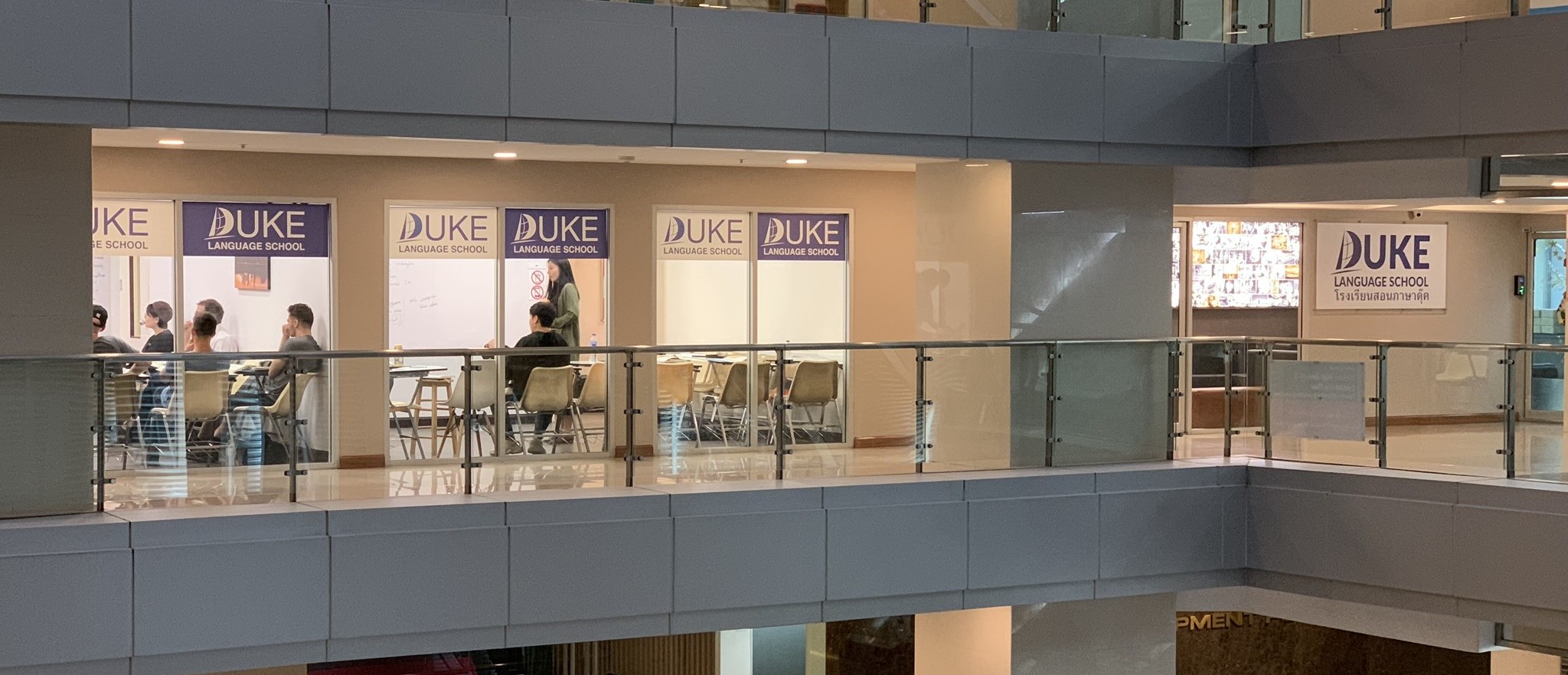
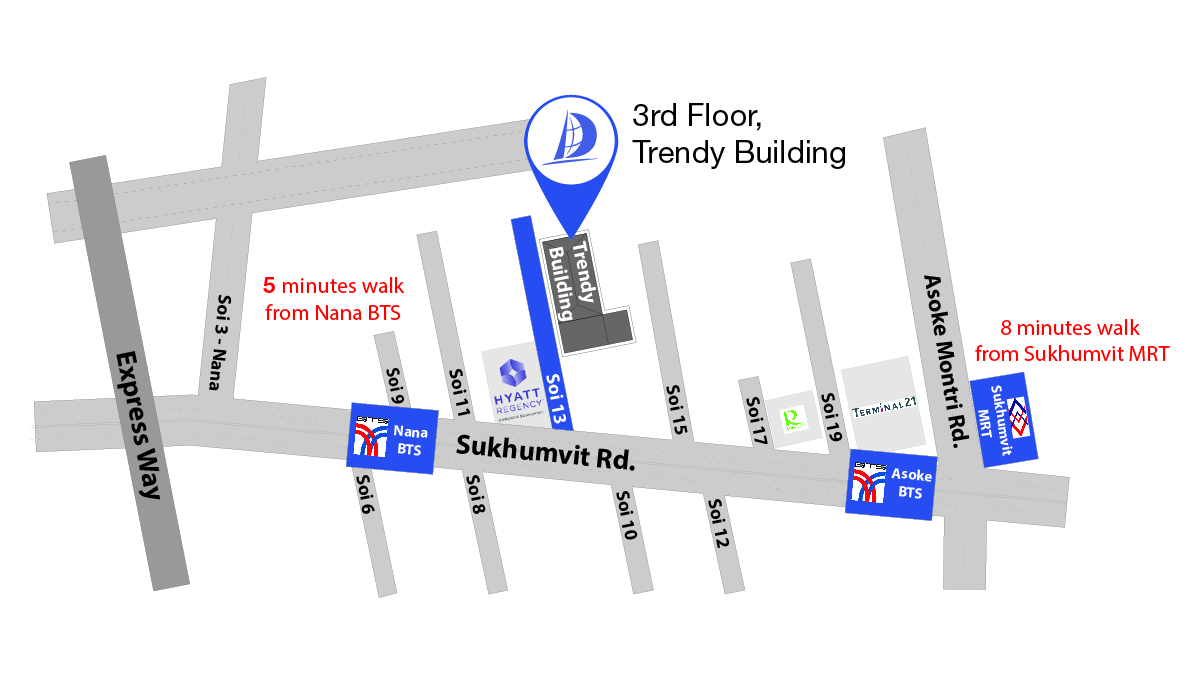
Where Duke Language School Fits Into This Journey
At Duke Language School, we believe Thai should be taught for real use, not just textbook completion.
For future retirees and long-term residents, this matters. The goal is not to memorize impressive grammar explanations. The goal is to speak more clearly, understand more of daily life, and feel more confident outside the classroom.
A good Thai course should help students build practical ability step by step. It should explain the language clearly, give enough repetition for confidence, and connect lessons to real situations in Thailand.
That means learning how to:
-
greet people naturally
-
order food and drinks
-
ask for prices
-
use polite Thai correctly
-
give taxi directions
-
talk about daily routines
-
describe simple problems
-
understand common Thai responses
-
read useful everyday words when appropriate
-
build confidence through guided practice
For students who qualify for an ED visa through Thai study, proper guidance is also important. Schools can provide course documents and support related to enrollment, but students must still meet visa requirements, attend classes, and follow immigration rules.
The best outcome is not just getting a visa. The best outcome is becoming more capable in Thailand.
Common Mistakes Future Retirees Make Before Moving to Thailand
Mistake 1: Assuming English Will Be Enough Everywhere
English is widely used in some areas, but not everywhere and not equally. Daily life becomes much easier when you can use at least basic Thai.
Mistake 2: Choosing a City Too Quickly
A place that feels exciting for two weeks may not feel right for five years. Test different locations before committing.
Mistake 3: Treating Thai as Optional
Thai may feel optional at first, especially in tourist-friendly areas. Over time, the language barrier can become tiring. Learning early prevents frustration later.
Mistake 4: Thinking Tones Must Be Perfect Before Speaking
Tones matter, but fear of tones often stops students from practicing. Speak, listen, receive correction, and improve gradually.
Mistake 5: Confusing Visa Categories
A study visa and a retirement visa are not the same. If you study Thai, study genuinely. If you plan to retire, understand the correct retirement pathway.
Mistake 6: Underestimating the Emotional Side of Relocation
Moving abroad is not only practical. It affects identity, routine, friendship, confidence, and mental well-being. Structured learning can make the transition healthier and more grounded.
FAQ: Learning Thai Before Retiring in Thailand
Quick FAQ Links
- Should I learn Thai before retiring in Thailand?
- Can I retire in Thailand without speaking Thai?
- Is an ED visa the same as a retirement visa?
- Can retirees study Thai in Thailand?
- Is Thai hard for older learners?
- How long should I study Thai before deciding to retire in Thailand?
- Do I need to read Thai?
- Will Thai people mind if I make mistakes?
- Can Duke Language School help with Thai study and ED visa support?
Should I Learn Thai Before Retiring in Thailand?
Yes. You do not need to be fluent, but learning practical Thai will make retirement in Thailand easier, safer, and more rewarding. It helps with daily independence, cultural understanding, healthcare communication, and social connection.
Can I Retire in Thailand Without Speaking Thai?
Yes, many foreigners do. But living without Thai often means relying more on other people, translation apps, English-speaking services, or foreigner-friendly areas. Basic Thai gives you more independence and a deeper experience of the country.
Is an ED Visa the Same as a Retirement Visa?
No. An ED visa is for genuine study or educational programs. A retirement visa is for people who meet retirement-related requirements, such as age and financial criteria. They are different visa categories with different purposes.
Can Retirees Study Thai in Thailand?
Yes, older adults can study Thai, and many do. Learning Thai can be especially useful for retirees because it supports daily confidence, social interaction, and long-term adjustment.
Is Thai Hard for Older Learners?
Thai is different, but it is learnable. Older learners often do well when lessons are practical, structured, and consistent. The key is not perfection. The key is regular practice and real-world use.
How Long Should I Study Thai Before Deciding to Retire in Thailand?
There is no single answer, but several months of study and daily life in Thailand can give you a much clearer picture than a short holiday. A longer stay helps you test your budget, location, lifestyle, healthcare needs, and ability to adapt.
Do I Need to Read Thai?
Reading Thai is very useful, but it does not have to be the first goal for every learner. Many students begin with speaking and listening, then add reading once they have built confidence. For long-term residents, reading Thai can make signs, menus, forms, and messages much easier to understand.
Will Thai People Mind If I Make Mistakes?
Usually, no. Most Thai people appreciate sincere effort. Mistakes are part of learning. Clear pronunciation and polite language matter more than perfection.
Can Duke Language School Help with Thai Study and ED Visa Support?
Duke Language School offers structured Thai courses and can support eligible students with the school documentation needed for an ED visa application. Visa approval and requirements depend on the relevant authorities, so students should always confirm their personal situation with the appropriate Thai embassy, consulate, or immigration office.
Final Takeaway
Thailand is easy to enjoy as a visitor, but it takes more effort to understand as a resident.
If you are thinking about retiring in Thailand, do not judge the country only by holidays, YouTube videos, online cost-of-living estimates, or other people’s stories. Spend real time here. Build a routine. Study the language. Talk to people. Test your budget. Visit hospitals before emergencies. Try different neighborhoods and cities. Learn how Thailand feels when it becomes ordinary life.
Thai language will not solve every problem, but it will make almost every part of long-term life easier to understand.
For future retirees, learning Thai is not just preparation for living in Thailand. It is one of the best ways to discover whether Thailand can truly feel like home.
About the Author
Arthit Juyaso (Bingo) is the Principal of Duke Language School and the author of Read Thai in 10 Days. For over a decade, he has helped foreign learners build practical Thai skills for real-life use, with a strong focus on clarity, structure, and steady long-term progress.