Halloween in Bangkok: Why Won’t Thais Whistle at Night?
Why a harmless whistle can make your Thai friends nervous, the ghosts behind Thailand’s superstitions, and where to celebrate Halloween in Bangkok in 2026.
By Arthit Juyaso (Bingo)
Principal and Curriculum Developer, Duke Language School
Author of Read Thai in 10 Days
Short answer: Halloween in Bangkok or not, many Thais grew up hearing from elders that whistling at night calls ghosts. Some families say it brings out snakes, and others say it tells thieves where you are. Nobody knows for certain where the rule started, and not every Thai believes it, but plenty of people still follow it out of respect more than fear.
Halloween in Bangkok is a funny thing to watch. Every October you’ll see plastic pumpkins in mall atriums, costume parades around Siam Square, and office parties where someone always shows up as a zombie. But under all that imported spookiness there’s a much older, much more local relationship with ghosts, and you usually bump into it by accident. For a lot of my foreign students, the moment comes not at a party at all, but on a quiet walk home when they start whistling and a Thai friend gently tells them to stop.
The Zombie at the Office Party
Let me paint you a picture, because I’ve heard versions of it from students more times than I can count. You’re new in Bangkok, the office announces a Halloween party, and you go all in: grey face paint, torn shirt, the full zombie shuffle. Your Thai coworkers love it. They take photos, they laugh, somebody asks where you bought the fake blood. Nobody is scared of you, not even a little.
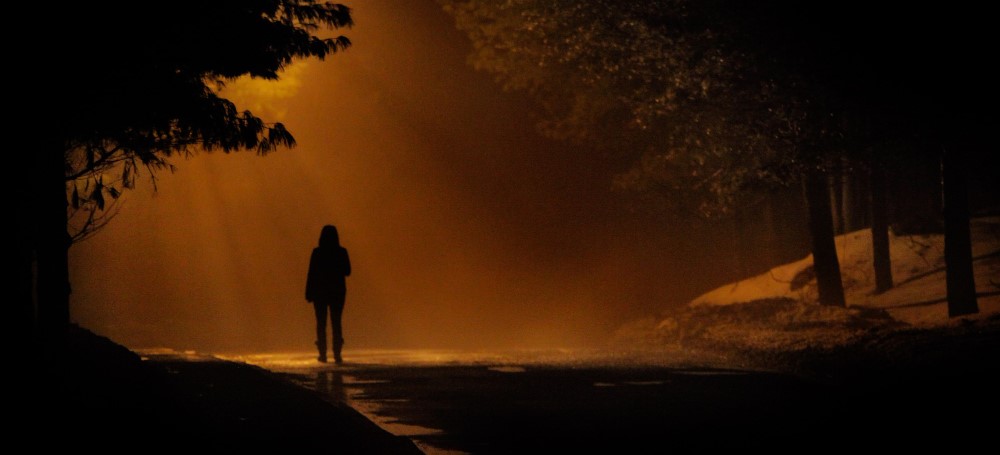
Then the party winds down and a few of you walk out to the soi together. You’re in a good mood, so you whistle a tune. And suddenly the same coworker who was cheerfully photographing your rotting face says, half laughing and half serious:
อย่าผิวปากตอนกลางคืน
yàa pǐu bpàak dtɔɔn glaang kʉʉn
“Don’t whistle at night.”
Somebody else adds:
เดี๋ยวผีมา
dǐao pǐi maa
“A ghost will come.”
The zombie was a joke. The whistle, apparently, was not.
Western Halloween is about dressing up as scary things for fun. Thai ghost culture is something people live next to every day, with its own rules, its own manners, and its own vocabulary. Once you understand which part is play and which part is respect, October in Bangkok becomes a lot more interesting, and you get to practise some genuinely useful Thai along the way.
Why Don’t Thais Whistle at Night?
So why the hush? The honest answer is that there isn’t one answer. Many Thais grew up hearing from elders, ผู้ใหญ่ (pûuyài), that whistling after dark calls ghosts or wandering spirits. That’s probably the version you’ll hear most often. Some families say it makes snakes come out instead. And a more practical explanation you’ll occasionally hear is about thieves: whistling gives away where you are, so grown-ups may simply have told kids a ghost story to keep them quiet at night. Similar warnings exist in Japan, where nighttime whistling is also associated with snakes, ghosts, and other unwanted visitors, which I find rather charming.
What nobody can tell you for certain is where the Thai custom started. There’s no established historical account identifying its origin, no famous king who banned whistling, and no date carved into a stone. So be suspicious of any blog that confidently tells you it’s an “ancient” law. It’s a household rule, passed down the way grandparents pass down most things, and it sits somewhere between a half joke and good manners. Plenty of Thai people don’t believe a ghost will turn up. They still might not whistle, the same way you might still knock on wood.
Here’s my advice as your teacher. If someone asks you to stop, don’t argue the science. Just stop, smile, and say:
อ๋อ ขอโทษครับ
ɔ̌ɔ, kɔ̌ɔtôot kráp
“Oh, sorry.” (Male speaker)
Or:
อ๋อ ขอโทษค่ะ
ɔ̌ɔ, kɔ̌ɔtôot kâ
“Oh, sorry.” (Female speaker)
That’s it. You’ve just shown you respect the people you’re with, and that matters far more than whether you personally believe in ghosts. If you want a lovely middle-ground phrase, learn this one:
ไม่เชื่ออย่าลบหลู่
mâi chʉ̂a yàa lóplùu
“If you don’t believe, don’t disrespect.”
It’s a familiar Thai saying and a beautiful little philosophy for living in someone else’s country. You don’t have to agree with every belief you encounter, but showing a little consideration for the people who hold those beliefs makes life considerably easier.
Thai Ghosts: Who’s Who (and Where They Really Come From)
Now, before you go hunting for ghosts, it helps to know that the Thai word ผี (pǐi) is much bigger than the English word “ghost.” In Thai folklore, ผี can refer to spirits of the dead, supernatural beings, and even certain protective spirits. It covers a whole crowd of characters, some scary, some sad, some protective. You’ll also hear กลัวผี (glua pǐi), “scared of ghosts,” which is a perfectly normal thing for a grown adult to admit in Thailand. Believe me, you’ll find no shortage of Thai people who take ghost stories seriously, even if they laugh about them afterwards.
The most famous Thai ghost by a mile is แม่นาค (mɛ̂ɛ nâak), Mae Nak of Phra Khanong. Her story comes from the Phra Khanong canal area, and one of the earliest known written accounts dates to 1899. According to the legend, Nak died during childbirth while her husband was away at war, but her spirit remained at home waiting for his return. When he finally came back, he found his wife and child waiting for him, completely unaware that neither was alive. It’s a tragic love story as much as a ghost story, which might explain why Thais have never grown tired of retelling it.
Mae Nak has appeared in countless films, plays, and television adaptations. When the film Nang Nak came out in 1999, it became the first Thai film to pass 100 million baht at the box office, which tells you how deep this story runs. The 2013 horror comedy Pee Mak was another enormous hit, taking the familiar legend in a rather different direction. If you’d like to read more about the history behind Mae Nak, the Thailand Foundation has an excellent account of the legend and its place in Thai culture.
But here’s the part I really want you to remember. Mae Nak’s shrine at Wat Mahabut, on Soi On Nut 7 near BTS On Nut, is not a haunted attraction. It’s a working place of worship where people come to ask for protection, good fortune, and help with personal wishes. If you visit, go the way you’d go to any temple: dress modestly, keep your voice down, and don’t treat it as a spooky photo spot. The ghost might be famous because of horror films, but the shrine is important to people for entirely different reasons.
Then there are the ghosts you’ll meet in films and costume shops. กระสือ (grà-sʉ̌ʉ), krasue, is a female spirit whose head flies at night with her organs hanging below. ผีปอบ (pǐi bpɔ̀ɔp), phi pop, is a spirit said to possess a person and consume internal organs, strongly associated with Isan folklore. And นางตานี (naang dtaa-nii), Nang Tani, is the spirit of a banana tree, usually shown as a beautiful woman dressed in green. These characters have roots in traditional and regional folklore, although they’ve become familiar across Thailand through films and television. Most Bangkok residents are more likely to encounter a krasue on a cinema screen than floating outside their condo window, thankfully.
One thing worth remembering is that these stories mean different things to different people. Some enjoy them purely as entertainment, while others grew up in communities where particular spirits were taken seriously. Enjoy the stories, laugh at the special effects, and dress up as a ghost if you like, but don’t make fun of the people or traditions behind them. There’s a difference between laughing at a horror movie and laughing at somebody’s beliefs.
Thai Superstitions You’ll Meet in Daily Bangkok
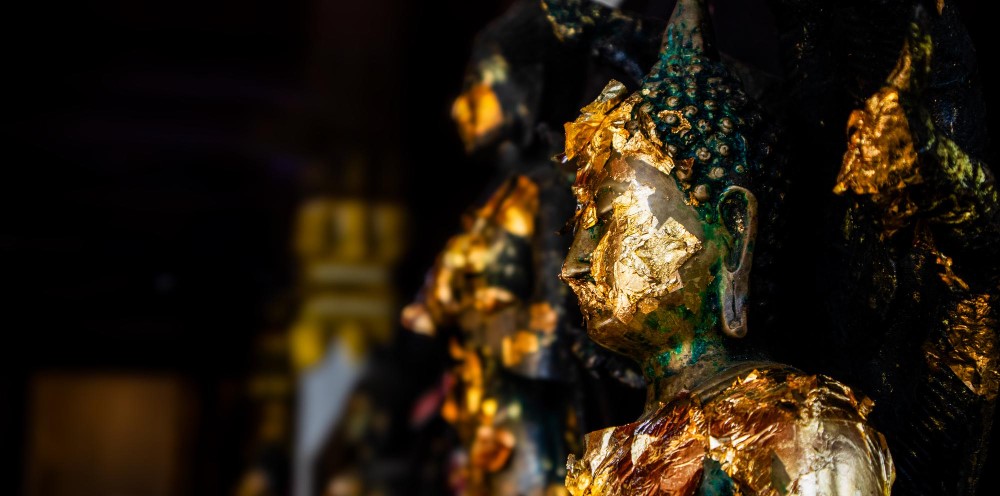
The ghost culture you’ll actually live with in Bangkok is quieter than any movie. Look outside almost any house, shop, or condo and you’ll see a spirit house, ศาลพระภูมิ (sǎan prá-puum), and sometimes, beside it, a separate, lower shrine associated with local or ancestral spirits called ศาลตายาย (sǎan dtaa yaai). These aren’t decorations, and they definitely aren’t Halloween props. People leave offerings there for protection and good fortune: flowers, food, drinks, and occasionally bottles of red Fanta, though that’s certainly not universal. The customs vary from place to place, but the basic idea is that these shrines acknowledge the spirits believed to watch over a particular location.
The polite rules are simple. Don’t lean on a spirit house, don’t put your bag on its ledge, don’t take jokey selfies with it, and never touch the offerings. You don’t need to ไหว้ (wâi) if you’re not comfortable with it. Just be respectful, and you’re doing fine. If you’re curious about why these little shrines are everywhere, research on spirit houses in urban Thailand shows how traditional beliefs about guardian spirits continue to exist alongside modern city life. Bangkok may be full of skyscrapers, but that doesn’t mean the old customs have disappeared.
Here’s another one you might hear if you ever go flat hunting. Rooms where someone died, ห้องมีคนตาย (hɔ̂ng mii kon dtaai), can make some potential tenants uncomfortable, and some owners arrange merit-making ceremonies or have monks bless a unit before putting it back on the market. Of course, plenty of renters couldn’t care less. You might even hear people suggesting that such rooms should be cheaper, although whether they actually rent for less is another question entirely. I won’t tell you they’re a bargain because, honestly, I haven’t seen reliable figures to support that. But the fact that people still talk about these things shows how traditional beliefs can influence perfectly ordinary decisions, even in a big modern city.
And here’s my favourite thing about all of this. In Thailand, you don’t have to believe in ghosts to get along with people who do. The important distinction is between enjoying ghost stories and mocking the people who take them seriously. Fictional ghosts, costumes, and horror films are fair game. Real shrines, offerings, funerals, and actual deaths deserve a different level of respect. Once you understand that distinction, it’s a very easy line to stay on.
The Thai Words You’ll Hear at a Halloween Party
Ghost talk in Thailand is social glue. People love swapping a creepy story, and the fastest way to join in is to share the shiver rather than debate the ghost. You don’t need a huge vocabulary, either. A handful of expressions will help you follow the conversation, react naturally, and perhaps even contribute a ghost story of your own. So let’s put a few words into real moments.
ขนลุก (kǒn lúk): Goosebumps
Someone tells a good ghost story and your arms prickle. That’s:
ขนลุก
kǒn lúk
“Goosebumps” or “the hair stands up.”
The nice thing is it isn’t only for ghosts. A brilliant concert, a cold breeze, or a moving speech can all give you ขนลุก, so you’ll get plenty of use out of it. It’s one of those everyday Thai expressions that sounds much more natural than trying to translate an English sentence word for word.
โดนผีหลอก (doon pǐi lɔ̀ɔk): Being Haunted or Frightened by a Ghost
The lights flicker in your condo corridor and your friend says:
โดนผีหลอกแน่เลย
doon pǐi lɔ̀ɔk nɛ̂ɛ ləəi
“A ghost is definitely messing with us.”
Your polite, friendly reply?
จริงเหรอ น่ากลัวจัง
jing lə̌ə, nâa-glua jang
“Really? That’s so scary!”
Notice I didn’t give you “I don’t believe in ghosts.” That line kills the fun every time. Nobody’s asking you to sign a declaration of faith in the supernatural. Sometimes your friend just wants someone to be frightened with.
เฮี้ยน (hían): Haunted or Supernaturally Powerful
You walk into an old building at night and want to ask the classic question:
ที่นี่เฮี้ยนมั้ย
tîinîi hían mái
“Is this place haunted?”
The word เฮี้ยน (hían) is often used for a place or spirit believed to have particularly strong supernatural power, so it’s a useful word to recognise in ghost stories. Notice the colloquial question particle มั้ย (mái) at the end, which you’ll hear constantly in everyday Thai. It’s the kind of small detail that makes your Thai sound more like the language people actually speak rather than something you’ve memorised from a textbook.
หลอน (lɔ̌ɔn): Creepy or Haunting
And when something simply feels eerie or unsettling, Thai people say:
หลอนมาก
lɔ̌ɔn mâak
“Really creepy.”
Drop it into conversation after a scary film and you’ll sound like you actually live here. These aren’t expressions you’ll only use at Halloween, either. Thai horror films are popular all year, ghost stories turn up in ordinary conversations, and people use words like ขนลุก and หลอน for all sorts of experiences. Learn them now, and you’ll probably find yourself using them long after the plastic pumpkins have disappeared from the shopping malls.
Halloween Events in Bangkok 2026
Now let’s be honest about something. Part of the reason Halloween in Bangkok has gone so local, with Thai ghosts in a Western format, is that malls, radio stations, and film studios have all spotted a good party. That’s fine. It just means you get to enjoy it with your eyes open. Bangkok has several Halloween events lined up for 2026, ranging from Thai ghost stories and horror films to live music and a pirate-themed river cruise. Here are four events confirmed on their official listings at the time of writing. Always double-check before you go, because plans can change.
SPIRITS ราตรี at theCOMMONS Cloud 11
Saturday, 31 October | From 5pm | Free entry
This one is probably the most “Thai ghost” event on the list. SPIRITS ราตรี (raa-dtrii) brings Thai folklore together with Halloween entertainment, including ghost stories, horror film screenings, games, and live music. At 6:30pm there’s a talk with Banjong Pisanthanakun, co-director of Shutter and director of The Medium, including a sneak peek of his new film Inherit. There’s also a ghost story circle, which requires free booking through Ticketmelon, and silent Thai horror screenings throughout the evening.
And if ghost stories aren’t enough, there’s a live performance by Thai-Belgian singer Violette Wautier scheduled for 10pm. The event itself is free, although some activities require booking or payment. If you want to experience Halloween with a distinctly Thai flavour, this would be my pick. You can find the full programme on theCOMMONS website.
Siam Halloween 2026 at Siam Square
Friday, 30 October to Sunday, 1 November | Free entry
Siam Halloween is back with three days of free concerts, more than 100 performers, and plenty of people showing off their Halloween costumes around Siam Square. Organised by Flex 104.5 and PMCU, it’s one of the bigger Halloween celebrations in Bangkok, and a good choice if you enjoy crowds, live music, and creative costumes. You’ll probably see everything from elaborate horror characters to people wearing something they threw together five minutes before leaving home. Either way, it’s free, and there’s plenty happening over the three days.
You can check the latest announcements and artist lineup through Flex 104.5.
Enchanted Fest 2026 at EmSphere
Saturday, 31 October | UOB LIVE, EmSphere
If you’re after a bigger music night, Enchanted Fest returns to UOB LIVE at EmSphere for its third year. The 2026 theme is Frozen Nightmares, with live performances, Halloween costumes, and elaborate stage production. This one is a ticketed event rather than a free street festival, so it’s worth checking prices and availability before making plans. It’s also more about music and atmosphere than traditional Thai ghost stories, although there’s certainly nothing wrong with that.
Details and tickets are available on the official UOB LIVE event page.
Ghost Boat on the Chao Phraya River
Saturday, 31 October | Party from 6pm | Cruise 8pm to 11pm
Here’s something a little different. Ghost Boat is a Halloween party on the Chao Phraya River, with DJs, dancing, live-band karaoke, and a three-hour cruise through Bangkok. The party starts at Bangkok Island Pier at 6pm, with the boat setting sail at 8pm and returning at 11pm. And fair warning: the dress code is pirate, so this one is about the river party, not Thai ghosts. If you’ve ever fancied dressing up as a pirate and singing karaoke on a boat, apparently Halloween is your chance.
You can find the latest details and tickets on Megatix.
And if you want more Banjong after Halloween, Inherit is scheduled to arrive in Thai cinemas on 19 November. It’s based on the Thai novel ทายาทอสูร and is a modern horror story rather than a traditional folk legend, but it’s another excuse to practise your ghost vocabulary in a cinema full of Thai people saying ขนลุก. Keep an eye out for it if you’re a fan of Thai horror.
A quick note on timing, too. October is a busy month for spiritual and religious traditions in Thailand. The southern ancestor merit-making festival สารทเดือนสิบ (sàat dʉan sìp) had its main concluding observances on 11 October, and ออกพรรษา (ɔ̀ɔk pansǎa), the end of the Buddhist rains retreat, falls on Monday, 26 October. These aren’t Halloween celebrations, of course, and they have their own histories and meanings. But they do remind you that Thailand has long had its own ways of remembering the dead, honouring ancestors, and observing the spiritual calendar.
If you’ve been reading along with our pieces on Bangkok’s yellow flags and what the floods felt like in the “Venice of the East”, you’ll know that Bangkok’s calendar is always full of these layers if you know where to look. A shopping mall might be putting up Halloween decorations while a family elsewhere in the city is preparing for a religious ceremony. Both are part of life in Bangkok, and understanding a little Thai helps you see the difference.
Go Out and Have Fun (Quietly, After Dark)
So this Halloween, wear the zombie face paint. Go to Siam Square, hear Banjong talk about ghosts, and scream at a Thai horror film. All of that is the fun part, and plenty of Thai people will enjoy it right alongside you. Just remember the other part too: hush when someone asks you to stop whistling, be gentle around spirit houses and shrines, and use your new words to share the shiver instead of arguing about it. That’s not about proving whether ghosts exist. It’s about understanding the people around you, and good manners in Thai will sometimes get you further than perfect tones ever will.
If you’d like to understand what your coworkers are actually saying when the ghost stories start, that’s exactly the sort of everyday Thai we teach. Have a look at our Thai courses and come and practise with us. Learning a language should help you understand the place where you live, including the little customs that nobody thinks to explain until you accidentally break one. Fun is our serious business, even in ghost season.
Frequently Asked Questions About Halloween and Thai Ghosts
Is Halloween Celebrated in Thailand?
Yes, especially in Bangkok, where shopping malls, entertainment venues, and event organisers hold Halloween parties, concerts, and costume events. Halloween isn’t a traditional Thai holiday, but it has become a popular occasion for entertainment, particularly among younger people and in Bangkok’s nightlife areas. Some celebrations also incorporate Thai ghosts and horror stories alongside the more familiar Western Halloween costumes.
Why Don’t Thais Whistle at Night?
Many Thais grew up hearing from elders that whistling at night calls ghosts or wandering spirits. Other versions of the superstition say it attracts snakes or unwanted attention from thieves. The exact origin of the belief is unknown, and not every Thai believes it, but some people still avoid whistling after dark out of habit or respect for family traditions.
Who Is Mae Nak in Thai Folklore?
แม่นาค (mɛ̂ɛ nâak), Mae Nak of Phra Khanong, is one of Thailand’s most famous ghosts. According to legend, she died during childbirth while her husband was away, but her spirit remained at home waiting for him. Her shrine at Wat Mahabut, near BTS On Nut in Bangkok, remains an active place of worship where visitors come to make offerings and ask for blessings.
Where Are the Halloween Events in Bangkok in 2026?
Confirmed events include SPIRITS ราตรี at theCOMMONS Cloud 11 on Saturday 31 October, Siam Halloween at Siam Square from 30 October to 1 November, Enchanted Fest at UOB LIVE in EmSphere on 31 October, and the pirate-themed Ghost Boat cruise on the Chao Phraya River on 31 October. Some events are free, while others require tickets or advance reservations. It’s best to check the organisers’ official websites before attending.
What’s the Thai Word for Ghost?
The Thai word for ghost is ผี (pǐi). It’s broader than the English word “ghost” and can refer to various kinds of spirits and supernatural beings, including some that are protective rather than frightening. The expression กลัวผี (glua pǐi) means “scared of ghosts,” while โดนผีหลอก (doon pǐi lɔ̀ɔk) means being frightened or troubled by a ghost.
What Are Spirit Houses in Thailand?
Spirit houses are small shrines found outside many Thai homes, businesses, and buildings. ศาลพระภูมิ (sǎan prá-puum) is associated with a guardian spirit of a particular place, while other shrines, such as ศาลตายาย (sǎan dtaa yaai), may honour local or ancestral spirits. People leave offerings and perform rituals according to their beliefs. Visitors don’t need to participate, but should treat the shrines and offerings respectfully.
Are Thai Ghost Beliefs Connected to Halloween?
Not directly. Traditional Thai ghost beliefs come from local folklore, spiritual traditions, and religious influences that developed independently of Western Halloween. Modern Halloween celebrations in Bangkok sometimes bring these two worlds together through Thai horror films, ghost-themed events, and costumes. That’s why you might see someone happily dressed as a frightening Thai ghost at a party while still following traditional superstitions in everyday life.
About the Author
Arthit Juyaso (Bingo) is the Principal and Curriculum Developer at Duke Language School. He is also a Thai language educator and the author of Read Thai in 10 Days.
His teaching focuses on helping foreign learners understand not just Thai vocabulary and grammar, but also how the language works in everyday conversations. Through his work at Duke Language School, he develops practical Thai learning materials that connect language with the culture, customs, and ordinary experiences of living in Thailand.
Sources and Further Reading
The cultural explanations in this article draw on Thai folklore, published historical accounts, and research into traditional beliefs. The 2026 Halloween event information was checked against organisers’ official listings.
Thailand Foundation: Mae Nak Phra Khanong, Thailand’s Most Famous Ghost (Love) Story
An account of Thailand’s best-known ghost legend, including its historical background, early written records, and influence on Thai films and popular culture.
Read the Thailand Foundation article
Tourism Authority of Thailand: Spiritual Places to Visit for Blessings
Information about important places of worship in Thailand, including Mae Nak’s shrine at Wat Mahabut and the traditions associated with visiting it.
Read the Tourism Authority of Thailand article
Michael Robert Pearce: Accommodating the Discarnate: Spirit Houses in Contemporary Urban Thailand
Academic research examining spirit houses, guardian spirits, and the continuing role of traditional spiritual beliefs in modern urban Thailand.
Read the research at Cornell University
Further Reading From Duke Language School
If you enjoyed learning about the traditions and everyday language behind Thailand’s ghost stories, here are a few more articles that explore different sides of Thai culture and communication.
How to Be Polite in Thai: Requests, Refusals, and เกรงใจ (greeng-jai)
Understanding Thai manners goes well beyond knowing when to say ครับ or ค่ะ. This article looks at how Thai people make polite requests, soften refusals, and use the idea of เกรงใจ to navigate everyday social situations.
Why Bangkok’s Yellow Flags Mean More Than “Vegan Week” (เจ Explained)
Ever wondered why yellow flags suddenly appear outside restaurants all over Bangkok in October? Discover the religious and cultural traditions behind Thailand’s Vegetarian Festival, and learn some useful Thai along the way.
When Bangkok Flooded: What “Venice of the East” Felt Like
Bangkok’s relationship with water goes back centuries, but what happens when the city’s old canals and modern streets meet a particularly heavy rainy season? Explore the history, everyday challenges, and Thai expressions that help explain life in a city built around water.