7 Scariest Thai Horror Movies (and the Real Thai Beliefs Behind Them)
By Arthit Juyaso (Bingo)
Principal and Curriculum Developer, Duke Language School
Author of Read Thai in 10 Days
If you ask Thai horror fans which movie scared them the most, you’ll probably start an argument. Some will swear by Shutter, others still haven’t recovered from Coming Soon, and younger fans might nominate Death Whisperer. But what makes Thai horror particularly interesting isn’t just the ghosts jumping out of dark corners. It’s how much of the supernatural world on screen comes from beliefs that people in Thailand still recognise today.
Walk down a Bangkok street and you’ll see spirit houses outside office buildings, bottles of red soda left as offerings, and small shrines beneath enormous trees. Visit a temple and you’ll find people making merit for deceased relatives. In rural communities, stories about guardian spirits and ghosts are still passed down through generations. You don’t have to believe in any of it to appreciate how deeply these traditions are woven into Thai culture.
That’s what makes these seven films worth watching. They’re frightening, certainly, but they also offer a fascinating introduction to Thai folklore, family relationships, religious traditions and everyday language. And once you understand the beliefs behind them, you’ll probably notice things in Thailand that you’ve walked past a hundred times without giving them a second thought.
The 7 Scariest Thai Horror Movies at a Glance
| Movie | Year | What makes it frightening |
|---|---|---|
| 1. Nang Nak | 1999 | A mother’s love that refuses to end with death |
| 2. Shutter | 2004 | Ghost photography, guilt and unfinished karma |
| 3. The Medium | 2021 | Spirit possession and rural religious traditions |
| 4. Death Whisperer (Tee Yod) | 2023 | A terrifying whisper and the danger of disturbing spirits |
| 5. Coming Soon | 2008 | A violent death and a ghost that escapes the cinema screen |
| 6. Inhuman Kiss | 2019 | The legendary krasue, a floating head with trailing entrails |
| 7. Alone | 2007 | A dead twin, a broken promise and a past that won’t stay buried |
This isn’t a scientific ranking of fear, of course. Everyone has different tastes. We’ve chosen seven memorable Thai horror movies that also give us something interesting to explore about Thailand beyond the cinema.
Why Thai Horror Feels Different
In many Western horror movies, the supernatural is something that invades an otherwise ordinary world. A family moves into a haunted house, somebody opens the wrong book, or an evil presence suddenly appears where it doesn’t belong. Thai horror often begins with a rather different assumption. What if spirits were already part of the world around us, and the problem was that somebody had upset one?
Thai spiritual traditions are complicated. Theravada Buddhism is central to much of Thai religious life, but local beliefs about ancestors, guardian spirits, sacred trees and supernatural beings exist alongside it. The distinction between religion, folklore and superstition isn’t always as tidy in everyday life as it might appear in a textbook.
Not every Thai person believes in ghosts, and practices vary enormously between families and regions. But even people who are sceptical about the supernatural may avoid disrespecting a shrine or joking about spirits in front of somebody who takes them seriously. Sometimes it’s belief, sometimes it’s habit, and sometimes it’s simply being considerate.
That mixture of fear, respect and uncertainty gives Thai filmmakers plenty to work with. A ghost doesn’t necessarily need to appear for an audience to feel uncomfortable. Sometimes all it takes is somebody doing something they’re not supposed to do.
Ghost or Older Sibling? A Quick Thai Tone Lesson
Before we get to the films, there’s one pair of Thai words worth learning.
ผี (pǐi) means ghost. It has a rising tone.
พี่ (pîi) means older brother or sister, or an older person you address familiarly. It has a falling tone.
The consonant and vowel sounds are similar, but changing the tone changes the meaning completely. Call your older friend พี่ and you’re being friendly. Get the tone badly wrong and you might accidentally call them a ghost instead.
You’ll also hear หนังผี (nǎng pǐi), literally a “ghost movie”, used to describe horror films. It’s a useful phrase to know, particularly if you’re asking a Thai friend what to watch.
Throughout this article, you’ll find a Thai Worth Knowing section for each film. We’ve organised the vocabulary into three categories:
- USE: Useful expressions you can say in an appropriate everyday situation.
- RECOGNIZE: Words worth understanding when you hear or read them, especially in films, folklore and cultural conversations.
- CAREFUL: Words or expressions that carry sensitive, serious or potentially offensive meanings. Understand the context before using them.
Now, let’s turn off the lights.
1. Nang Nak (1999): Thailand’s Most Famous Ghost Story
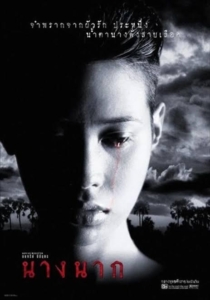
Long before Shutter and Death Whisperer, there was Mae Nak, the ghost of a woman whose love for her husband was so powerful that even death couldn’t persuade her to leave him alone.
Set in 19th-century Phra Khanong, then a rural canal community outside Bangkok, Nang Nak tells the story of Mak and his pregnant wife Nak. When Mak is called away to fight in a war, Nak stays behind to await his return. He eventually comes home wounded and exhausted, but his wife and their baby are there to welcome him. For a while, everything seems perfectly normal.
The villagers, however, know something terrible that Mak doesn’t. Nak died while he was away, along with their unborn child. The woman living in his house is a ghost, and anyone who threatens to reveal the truth risks facing her fury.
What makes director Nonzee Nimibutr’s 1999 film so memorable is that Nak isn’t simply a monster waiting to frighten people. She’s a wife who desperately wants her family back. The audience can sympathise with her longing while being horrified by what she has become. That combination of tenderness and terror helped make Nang Nak the first Thai film to earn more than 100 million baht at the box office.
The Belief Behind Mae Nak
Thai folklore has a name for the ghost of a woman who died while pregnant, with her unborn child still inside her: ผีตายทั้งกลม (pǐi dtaai táng glom). In traditional belief, this kind of death can produce a particularly powerful and frightening spirit.
There’s an interesting language detail here. The word กลม usually means “round” in modern Thai, but in this expression it has an older meaning of “entire” or “all”. ตายทั้งกลม therefore refers to the death of both mother and unborn child, rather than simply describing a pregnant woman’s round stomach.
Mae Nak’s legend has been told and retold for generations, with different versions explaining her death and her husband’s absence in different ways. Historians cannot establish that the supernatural events actually happened. What we can establish is that the story has become an extraordinary part of Thailand’s cultural identity.
The 2013 comedy Pee Mak, for example, retells the same legend from a much funnier perspective. Meanwhile, Womb of the Dead (ทั้งกลม), scheduled for release on November 12, 2026, draws on the same frightening category of ghost.
Where the Legend Still Lives
You don’t have to visit a cinema to encounter Mae Nak today. Her shrine stands at Wat Mahabut, off Sukhumvit 77 in Bangkok’s On Nut area, where devotees still come to pay their respects.
The offerings are unusually personal. Alongside flowers and incense, you may see beautiful Thai dresses, cosmetics, toys and children’s clothes. Visitors bring gifts not just for Mae Nak, but also for the baby she lost.
One of the most interesting traditions involves Thailand’s military conscription lottery. Men who are eligible for the draft draw either a red or black card. A black card means exemption, while a red card means they must serve. Mae Nak is especially popular among men praying to draw the black card, and some return with offerings after their wish comes true.
That’s quite a transformation for a supposedly terrifying ghost. The woman whose husband was taken away from her has become someone people ask to protect them from a similar separation.
If you visit, treat the shrine as a place of worship rather than a horror attraction. Follow posted instructions, respect people making offerings and ask before photographing worshippers.
Thai Worth Knowing
| Thai | Meaning | Guidance |
|---|---|---|
| แก้บน (gɛ̂ɛ bon) | Fulfil a vow or promise after a wish comes true | USE |
| ใบดำ / ใบแดง (bai dam / bai dɛɛng) | Black card, exempt / red card, drafted | USE |
| ผีตายทั้งกลม (pǐi dtaai táng glom) | Ghost of a woman who died with her unborn child | RECOGNIZE |
Try saying:
ถ้าได้ใบดำ จะมาแก้บนด้วยชุดไทย
tâa dâai bai dam jà maa gɛ̂ɛ bon dûai chút tai
“If I get the black card, I’ll come back and fulfil my vow with a Thai dress.”
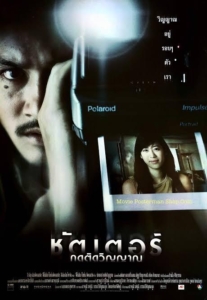
2. Shutter (2004): When Your Past Refuses to Leave You Alone
Few Thai horror movies have earned a reputation quite like Shutter. More than twenty years after its release, it remains one of the country’s best-known supernatural thrillers. And if you’ve seen it, there’s a good chance you still remember the photographs.
The story begins when Tun, a photographer, and his girlfriend Jane accidentally hit a young woman with their car. Rather than stopping to help, they flee. Soon afterwards, Tun starts noticing strange shapes in his photographs. Faces appear where nobody was standing, white smears obscure the images, and his friends begin dying under disturbing circumstances.
At first, the haunting seems connected to the hit-and-run accident. But as Jane investigates, she discovers that the dead woman has a connection to Tun’s past, and that he knows considerably more than he’s willing to admit.
The film takes an ordinary object, the camera, and turns it into something frightening. We usually trust photographs because they preserve moments we’ve already experienced. In Shutter, however, the camera keeps revealing things that the characters would rather forget. And the more Tun tries to escape what happened, the harder it becomes to deny.
Ghosts, Guilt and Karma
The cultural connection here is particularly interesting because Shutter deals with something familiar in Thai religious life: the relationship between actions, consequences and attempts to make peace with the dead.
The film explicitly refers to making merit, or ทำบุญ (tam bun). In Thai Buddhist practice, people make merit through activities such as offering food to monks, supporting temples or performing charitable acts. They may also dedicate that merit to deceased relatives or others who have passed away.
One familiar ritual is กรวดน้ำ (grùat náam), in which water is poured slowly while merit is dedicated to others. The ritual symbolises the act of sharing merit, and you’ll encounter it at temples, memorial ceremonies and funerals.
Another idea sometimes associated with unresolved suffering is เจ้ากรรมนายเวร (jâo gam naai ween), often translated as a “karmic creditor”. In popular belief, this refers to someone with whom you have unresolved karmic obligations, perhaps because of harm caused in this life or a previous one.
That last expression is useful cultural background rather than a term the film specifically sets out to teach. But it helps explain why making merit, seeking forgiveness and trying to resolve past wrongs are familiar themes in Thai supernatural stories.
Shutter also adds a darker point. Making merit may be intended to bring peace, but it isn’t a magical substitute for taking responsibility. Tun’s problem is not simply that a ghost is angry with him. It’s that he has spent years refusing to face what he did.
A Tradition You’ll See Outside the Cinema
Visit a Thai temple during a merit-making ceremony and you may see families offering food or other necessities to monks. Afterwards, someone may carefully pour water into a small container while prayers are recited. The water may later be poured onto the ground or at the base of a tree.
These are ordinary acts of religious devotion, not scenes from a horror movie. But understanding their meaning makes the way Thai ghost stories approach guilt, forgiveness and unsettled spirits much easier to appreciate.
Thai Worth Knowing
| Thai | Meaning | Guidance |
|---|---|---|
| ทำบุญ (tam bun) | Make merit | USE |
| กรวดน้ำ (grùat náam) | Pour water to dedicate merit | USE |
| เจ้ากรรมนายเวร (jâo gam naai ween) | Karmic creditor | RECOGNIZE |
| ขออโหสิกรรม (kɔ̌ɔ àhǒosìgam) | Ask for forgiveness, particularly in a serious context | CAREFUL |
Try saying:
เสาร์นี้ไปทำบุญที่วัดกันมั้ย
sǎo níi bpai tam bun tîi wát gan mái
“Want to go make merit at the temple this Saturday?”
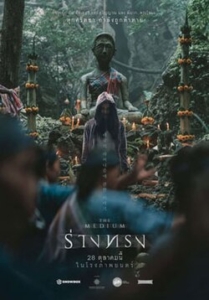
3. The Medium (2021): When Spirits Become Part of the Family
If Shutter makes you afraid of photographs, The Medium might make you uncomfortable about visiting a quiet rural village.
Presented as a documentary, the film follows Nim, a spirit medium living in Thailand’s northeastern region, commonly called Isan. Nim serves a local goddess known as Ba Yan, a spiritual responsibility traditionally passed down through the women of her family. When her niece Mink begins behaving strangely, the family wonders whether the goddess has chosen a new medium.
What begins as an intimate portrait of religious life gradually becomes something much more disturbing. Mink’s behaviour grows increasingly frightening, and the family struggles to understand whether they are dealing with a protective spirit, something malicious, or a force they cannot control.
Part of the film’s effectiveness comes from its documentary style. The rituals, conversations and family disagreements initially feel almost mundane. Rather than introducing a monster immediately, the film gives the audience time to become familiar with a community where the supernatural is already part of everyday life.
How Much of The Medium Is Real?
Here’s an important distinction. Ba Yan is a fictional goddess created for the film. The production drew inspiration from research into regional spiritual practices, but the story should not be treated as a documentary of a specific real-world religion.
Traditional spirit-medium practices do exist in parts of Thailand, particularly where local ancestor worship and other forms of folk religion remain important. A medium, known as a ร่างทรง (râang song), is understood by believers to act as a vessel through which a spirit or deity can communicate.
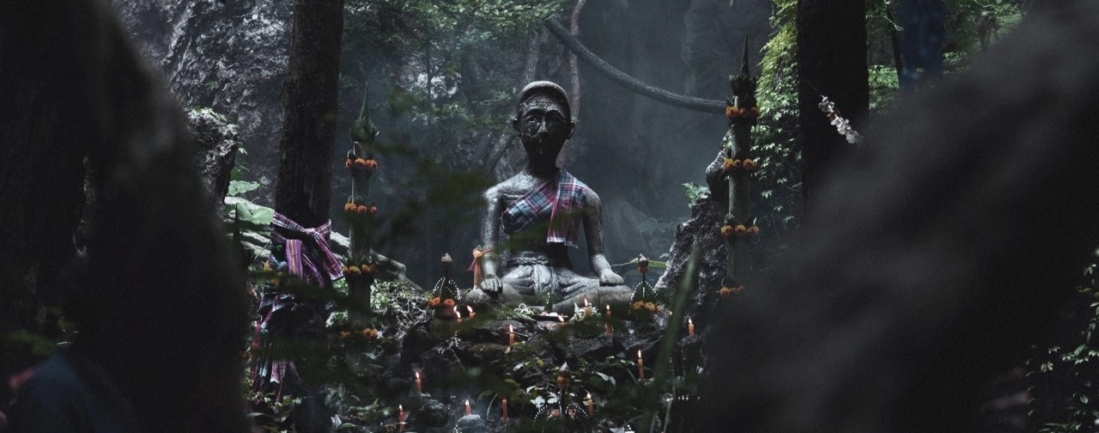
One genuine Isan tradition involves ผีปู่ตา (pǐi bpùu dtaa), protective ancestral guardian spirits associated with a village and its surrounding land. Communities may honour them at shrines in sacred groves called ดอนปู่ตา. A respected elder, often known as เฒ่าจ้ำ, may help oversee ceremonies and communicate with the guardian spirits through local ritual traditions.
Unlike the sinister forces in The Medium, these guardian spirits are generally respected as protectors. Their role is associated with the welfare of the village, the land and the people living there. In some communities, the sacred status of the surrounding forest has even helped protect trees from being cut down.
That’s an interesting side of Thai ghost beliefs that horror movies rarely emphasise. Not every spirit is something people want to drive away. Some are spirits they hope will stay.
Respecting Local Traditions
If you’re travelling through rural Isan and see a small shrine in a grove of old trees, it may be connected to a village guardian spirit. Such places aren’t necessarily tourist attractions, and rules about entering or taking things from the area vary by community.
It’s best to ask a local person before approaching a sacred site. The same applies if you encounter a ceremony involving spirit mediums or trance. Whatever your personal beliefs, remember that it may be an important religious or emotional occasion for the people involved.
Thai Worth Knowing
| Thai | Meaning | Guidance |
|---|---|---|
| ผีปู่ตา (pǐi bpùu dtaa) | Isan ancestral village guardian spirit | RECOGNIZE |
| ร่างทรง (râang song) | Spirit medium, also the film’s Thai title | RECOGNIZE |
| ผีเข้า (pǐi kâo) | Spirit possession, also used figuratively about someone’s behaviour | CAREFUL |
You might hear:
ผีเข้าเหรอ
pǐi kâo rǎə
“What’s gotten into you?”
Friends sometimes say this teasingly when somebody behaves unusually. Be careful, though. It can sound insulting, particularly when someone’s behaviour is connected to illness or genuine distress.
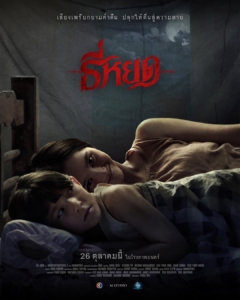
4. Death Whisperer (Tee Yod, 2023): The Terror Beneath an Abandoned Shrine
You don’t need to understand what “Tee Yod” means to find it frightening. In fact, the mystery surrounding the phrase is part of what makes the film so effective.
Set in rural Kanchanaburi in the early 1970s, Death Whisperer follows a family living on an isolated farm. After a young girl in the area dies under mysterious circumstances, the family’s daughters begin seeing a strange woman dressed in black. Soon, one daughter, Yam, becomes seriously ill and begins behaving in ways that terrify her relatives.
Her older brother Yak returns from military service determined to protect the family. But guns, courage and a willingness to fight aren’t much help against something that seems able to move between the natural and supernatural worlds.
The film is especially effective at turning familiar rural surroundings into places of danger. A large tree at the edge of a field, a quiet road or an abandoned shrine can suddenly feel threatening. And then there’s that whisper, repeating a phrase whose exact meaning remains uncertain.
The original Tee Yod was adapted from a story shared online by Krittanont, who presented it as an account connected to his family. That makes for an interesting origin story, but it doesn’t establish the supernatural events as historical fact.
The franchise has continued to expand. On September 30, 2026, Tee Yod: Saming the Werebeast (ธี่หยด สมิงเขาขวาง) was released as a prequel involving the legendary เสือสมิง, a man-eating supernatural tiger capable of changing form.
Why Abandoned Shrines Feel So Unsettling
One of the interesting details in the original film is its connection to an abandoned shrine, or ศาลร้าง (sǎan ráang). To understand why that matters, it helps to know a little about Thailand’s spirit houses.
Spirit houses are common outside homes, hotels, offices and shops. They serve different religious and spiritual purposes, and it would be a mistake to assume that every shrine is a home for a ghost.
For example, a ศาลพระภูมิ (sǎan prápuum) is associated with a guardian deity of the land, while a ศาลเจ้าที่ (sǎan jâotîi) is connected to local land spirits. Their appearance and arrangement can vary, although ศาลพระภูมิ is commonly elevated on a single pillar.
When a spirit house becomes old, damaged or unwanted, some people believe it should not simply be thrown away like ordinary rubbish. They may seek ritual guidance, ask forgiveness or arrange for its removal respectfully. As a result, discarded shrines can sometimes be found gathered near trees or other locations.
Not every abandoned shrine is believed to be dangerous, of course. But it’s easy to see why an untended shrine beneath a huge tree makes such an effective setting for a ghost story.
What’s With the Red Soda and Zebras?
Look closely at Thai spirit houses and you may notice offerings of fruit, jasmine garlands, incense and bright red bottles of soda, commonly called น้ำแดง (náam dɛɛng).
There are different folk explanations for why red drinks became popular offerings. Some connect them to older ideas about blood and sacrifice, while others associate the colour red with auspiciousness. These explanations shouldn’t be treated as a single established historical origin.
The zebra figurines are even more curious. You’ll sometimes see entire groups of them at roadside shrines. One popular explanation links zebras to pedestrian crossings and road safety, although the precise origin of the custom isn’t settled.
Either way, the offerings are very real. And once you’ve watched Death Whisperer, you may find yourself looking at roadside shrines a little differently.
If you’re curious about a shrine, admire it without touching or moving the offerings. They’re gifts made by other people, often for very personal reasons.
Thai Worth Knowing
| Thai | Meaning | Guidance |
|---|---|---|
| ศาลพระภูมิ (sǎan prápuum) | Spirit house associated with a land guardian deity | USE |
| น้ำแดง (náam dɛɛng) | Red soda, a common shrine offering | USE |
| ม้าลาย (máa laai) | Zebra | USE |
| ศาลร้าง (sǎan ráang) | Abandoned shrine | RECOGNIZE |
Try saying:
ทำไมที่ศาลมีม้าลายเยอะจัง
tammai tîi sǎan mii máa laai yə́ jang
“Why are there so many zebras at the shrine?”
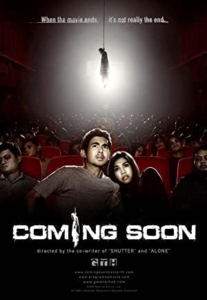
5. Coming Soon (2008): The Ghost That Escaped the Cinema
Imagine working late at a cinema and discovering that the ghost from the horror movie you’re screening has somehow stepped into the real world. That’s the wonderfully disturbing idea behind Coming Soon.
Shane is a projectionist involved in an illegal recording of a new horror film. The film-within-the-film features a woman named Chaba who is hanged by angry villagers. But when Shane and his colleagues begin experiencing strange events, it becomes clear that the horror may not be confined to the screen.
As Shane investigates, he discovers that the actress who played Chaba, Ingchan, actually died during the production. What viewers believed was a performance now carries a much darker significance.
Coming Soon has a clever way of making its audience uncomfortable. You’re watching a film about people who watch a film and suffer terrible consequences. It turns the simple act of sitting in a dark cinema into something threatening, making you wonder whether the danger might extend beyond the characters on screen.
The Belief in ผีตายโหง
A major cultural connection is ผีตายโหง (pǐi dtaai hǒong), a ghost associated with sudden or unnatural death. In Thai folklore, deaths caused by accidents, violence or other unexpected circumstances are sometimes believed to leave behind particularly troubled spirits.
The idea is that a person who dies suddenly may not be prepared to leave the world. Depending on the story, the spirit may be confused, angry or unable to move on. Some legends portray these ghosts as especially dangerous, while others treat them as unfortunate beings deserving sympathy.
This belief helps explain why Thai ghost stories often pay close attention to how a person died, not just the fact that they died. The death of an elderly person after a long illness may carry very different supernatural associations from the death of someone killed in an accident.
There are also real-world practices connected to sudden death. Funeral arrangements can vary according to the circumstances, religious traditions and local customs. In some communities, a death considered unnatural may involve additional rituals or precautions.
At roadside accident sites, you may occasionally see shrines or offerings associated with the spirits of people who died there. These are expressions of belief and remembrance, not evidence that a location is haunted.
A Word You Shouldn’t Throw Around
There’s a reason to be especially careful with the expression ผีตายโหง. It refers to a frightening kind of death, and the related curse ไปตายโหง, roughly “go die a horrible death”, is extremely rude.
You might hear it in a heated argument or a horror film, but it isn’t something you should imitate casually.
A much more useful language lesson is knowing what to say when someone has genuinely lost a loved one. In Thai, simple condolences are usually more appropriate than elaborate expressions about spirits or karma.
Thai Worth Knowing
| Thai | Meaning | Guidance |
|---|---|---|
| เสียใจด้วยนะครับ / นะคะ (sǐajai dûai ná kráp / ná ká) | I’m sorry for your loss | USE |
| ขอแสดงความเสียใจด้วย (kɔ̌ɔ sadɛɛng kwaam-sǐajai dûai) | Please accept my condolences, formal | USE |
| งานศพ (ngaan sòp) | Funeral | USE |
| ผีตายโหง (pǐi dtaai hǒong) | Ghost associated with sudden or unnatural death | RECOGNIZE |
| ไปตายโหง (bpai dtaai hǒong) | A very offensive curse | CAREFUL |
Try saying:
พรุ่งนี้ต้องไปงานศพ
prûngníi dtɔ̂ng bpai ngaan sòp
“I have to go to a funeral tomorrow.”
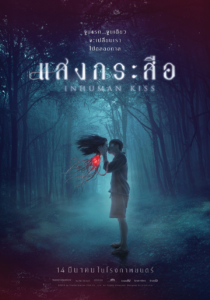
6. Inhuman Kiss (2019): The Flying Head That Made Thais Bring in Their Laundry
A beautiful young woman whose head detaches from her body at night, trailing glowing internal organs as she flies through the darkness. If that sounds like something from a particularly disturbing nightmare, welcome to the world of the กระสือ (gràsʉ̌ʉ).
In Inhuman Kiss, a young woman named Sai discovers that she has inherited the curse of the krasue. By day, she lives an apparently ordinary life in a rural Thai village during the 1940s. But at night, her head separates from her body and goes searching for flesh and blood.
As disturbing incidents occur around the village, suspicion grows and a group of hunters sets out to destroy the creature. Meanwhile, Sai’s childhood friends Jerd and Noi become caught between their feelings for her and the fear spreading through the community.
What makes this film interesting is that the krasue isn’t presented merely as a disgusting monster. Sai is frightened by what she’s becoming, and she has little control over it. Much of the story is about love, rejection and the danger of being seen as different.
That gives the film a surprisingly human centre, even when the special effects become spectacularly unpleasant.
The Real Krasue Legend
The krasue is one of the most recognisable spirits in Thai folklore, although related legends appear in other parts of Southeast Asia.
By day, the krasue may appear to be an ordinary woman. At night, according to legend, her head and internal organs separate from her body and float through the air, sometimes accompanied by an eerie glow. The spirit is associated with blood, decay and bodily substances, particularly those connected to childbirth.
Some stories say that thorny branches or sharp plants can protect a house because the creature’s exposed organs might become caught on them. Others describe how the krasue hunts animals or searches for unpleasant things to eat.
But the most memorable superstition might be the one about laundry.
In some Thai families, children are told not to leave clothes hanging outside overnight because a krasue might wipe its filthy mouth on them. The film refers directly to this folk belief, and it’s the sort of warning that can stay in your head long after you’ve stopped believing in the supernatural.
Of course, there are perfectly ordinary reasons to bring in washing before dark, including moisture, insects and the possibility of unexpected rain. But telling a child that a flying head might use their favourite shirt as a napkin is certainly more memorable.
When Folklore Becomes Harmful
The krasue isn’t the only spirit associated with consuming flesh. Another figure is ผีปอบ (pǐi bpɔ̀ɔp), a possessing spirit linked to disturbing appetites in regional folklore.
These stories have a serious side. Accusing a real person of being possessed or associated with an evil spirit can lead to fear, exclusion and mistreatment. Folklore may be entertaining when it’s on a cinema screen, but it shouldn’t become an excuse to stigmatise people in real life.
That’s one reason Inhuman Kiss works as more than a monster movie. The supernatural threat is frightening, but so is the possibility that a frightened community might turn against one of its own.
Thai Worth Knowing
| Thai | Meaning | Guidance |
|---|---|---|
| ตากผ้า (dtàak pâa) | Hang laundry out to dry | USE |
| กระสือ (gràsʉ̌ʉ) | The flying-head spirit known as a krasue | RECOGNIZE |
| ผีปอบ (pǐi bpɔ̀ɔp) | A possessing, flesh-eating spirit from regional folklore | CAREFUL |
Try saying:
อย่าตากผ้าทิ้งไว้ตอนกลางคืน
yàa dtàak pâa tíng wái dtɔɔn glaang kʉʉn
“Don’t leave laundry hanging outside overnight.”

7. Alone (2007): The Twin Who Refused to Be Forgotten
Some of the most disturbing horror movies don’t need an elaborate supernatural creature. All they need is a family secret and somebody who refuses to let go.
In Alone, Pim and Ploy are twin sisters who were born physically joined together. As children, they promise never to leave each other. But following an operation to separate them, Ploy dies, leaving Pim to live with the guilt of surviving.
Years later, Pim has built a new life in South Korea. When her mother becomes seriously ill, she returns to Thailand and the home where she grew up. There, strange events begin to suggest that Ploy may not have accepted their separation quite as easily as everyone thought.
Much like Nang Nak, the film turns a powerful emotional attachment into something frightening. What happens when love, jealousy and resentment become so tangled that even death cannot separate them?
The Superstition About Twins
The film refers to an unsettling belief that when one twin dies, the other may soon follow. It’s an effective piece of supernatural storytelling, but it shouldn’t be mistaken for a medical rule or an established fact about twins.
There is, however, a remarkable historical connection to Thailand.
In 1811, twin brothers named Chang and Eng were born in Siam, in what is now Samut Songkhram province. Physically joined together, they became internationally famous during the 19th century and eventually settled in the United States.
Their fame helped popularise the English expression “Siamese twins”, although “conjoined twins” is the more appropriate modern medical term.
Chang and Eng both married, raised families and lived into their sixties. Then, on January 17, 1874, Chang died, followed by Eng approximately two hours later. Their extraordinary lives and closely spaced deaths helped make their story an enduring part of popular history.
The events are documented, but they don’t prove the superstition presented in Alone. The historical story and the supernatural belief are two separate things, even if the coincidence is undeniably eerie.
Even Twins Have an Older and Younger Sibling
There’s also a fascinating Thai language connection.
Thai culture places considerable importance on relative age when addressing people. The word พี่ (pîi) refers to an older sibling, while น้อง (nɔ́ɔng) refers to a younger one. These words are also used widely outside families to address people in a friendly or respectful way.
That means even twins born only a few minutes apart may be described as แฝดพี่ (fɛ̀ɛt pîi), the older twin, and แฝดน้อง (fɛ̀ɛt nɔ́ɔng), the younger twin.
It’s a small detail, but one that reveals how much family relationships shape everyday Thai conversation.
And it brings us back to the film’s central idea. Pim and Ploy may have shared almost everything from birth, but they were still two individuals with their own desires, fears and jealousies. Their tragedy begins when a promise to stay together becomes something neither can escape.
Thai Worth Knowing
| Thai | Meaning | Guidance |
|---|---|---|
| แฝดพี่ / แฝดน้อง (fɛ̀ɛt pîi / fɛ̀ɛt nɔ́ɔng) | Older twin / younger twin | USE |
| แฝดตัวติดกัน (fɛ̀ɛt dtua dtìt gan) | Conjoined twins | USE |
| สัญญา (sǎnyaa) | Promise | USE |
| แฝดสยาม (fɛ̀ɛt sayǎam) | Historical term associated with “Siamese twins” | RECOGNIZE |
Try saying:
เราสัญญากันว่าจะอยู่ด้วยกันตลอดไป
rao sǎnyaa gan wâa jà yùu dûai gan dtalɔ̀ɔt bpai
“We promised we’d stay together forever.”
What These Thai Horror Movies Have in Common
Look beyond the jump scares and you’ll notice that these seven films have something in common. Their ghosts and supernatural forces are often connected to relationships that have gone wrong, obligations that haven’t been fulfilled, or boundaries that somebody has crossed.
In Nang Nak, a wife cannot bear to lose her husband. In Shutter, a man’s past refuses to stay hidden. The Medium explores a family’s responsibilities towards the spiritual world, while Death Whisperer brings supernatural danger into an ordinary rural home. Coming Soon draws its horror from an unnatural death, Inhuman Kiss from the fear of rejection, and Alone from a bond between sisters that has become impossible to escape.
These aren’t seven expressions of one single Thai belief. They draw on different traditions, legends and storytelling devices. But together, they show how Thai horror often connects the supernatural to recognisable human concerns: love, guilt, responsibility, grief and respect for things we may not fully understand.
And that’s why the cultural details matter.
Once you’ve learned what a spirit house is, you’ll notice them everywhere. Once you understand the idea of dedicating merit to the dead, certain scenes in Thai movies will carry more meaning. And once you know what a krasue is, you may never look at laundry hanging outside at night quite the same way again.
A Few Things Worth Knowing About Thai Ghost Etiquette
You don’t need to believe in ghosts to be respectful of the people who do. If you’re visiting Thailand, a little cultural awareness can prevent some awkward moments.
At shrines, avoid touching offerings or treating sacred objects as props for photographs. During religious ceremonies, be considerate of people who are praying. If someone tells you that a place is spiritually important, ask about its significance rather than immediately making a joke.
Be especially thoughtful around funerals and accident sites. Words connected to violent death, possession and curses can sound considerably harsher in Thai than learners might expect. And if someone brings their laundry inside before dark because of something their grandmother told them, there’s really no need to argue about flying heads.
Respecting a tradition doesn’t require you to accept every supernatural claim as true. It simply means understanding that a story which seems entertaining to you might carry a more personal meaning for someone else.
Frequently Asked Questions About Thai Horror Movies
What is the scariest Thai horror movie?
There isn’t an objectively scariest Thai horror movie, but Shutter (2004), Coming Soon (2008) and The Medium (2021) are strong choices for viewers seeking intense supernatural horror. Shutter is especially effective if you enjoy psychological suspense, while Coming Soon is a good choice for viewers who enjoy jump scares. If you prefer atmosphere, tragedy and folklore, try Nang Nak (1999).
What is the most famous Thai ghost story?
Mae Nak Phra Khanong is among Thailand’s most famous ghost legends. The story concerns a woman who dies while pregnant but continues waiting for her husband to return home. Her legend has inspired numerous films, television series and stage productions, including Nang Nak (1999) and Pee Mak (2013). Her shrine at Wat Mahabut in Bangkok remains a place of worship.
Is Pee Mak a horror movie?
Pee Mak (2013) is primarily a supernatural comedy based on the Mae Nak legend. It uses the same characters and ghostly premise as more serious adaptations, but its emphasis is on humour and friendship as much as scares. Viewers who want a genuinely frightening version of the story should consider Nang Nak instead.
Is Death Whisperer (Tee Yod) based on a true story?
Death Whisperer (2023) was adapted from an account that author Krittanont shared online and presented as a story connected to his family. However, the supernatural events depicted in the film have not been independently established as historical fact. It is more accurate to describe the film as inspired by a purported true story.
What is the latest Tee Yod movie in 2026?
Tee Yod: Saming the Werebeast (ธี่หยด สมิงเขาขวาง) was released in Thai cinemas on September 30, 2026. It is a prequel involving Yak and a supernatural tiger known as a เสือสมิง, expanding the horror franchise beyond the events of the original Death Whisperer.
What is Womb of the Dead (ทั้งกลม)?
Womb of the Dead is a Thai horror film scheduled for release on November 12, 2026. Its story draws on the traditional idea of ตายทั้งกลม, referring to a woman who dies while her unborn child is still inside her. The film belongs to a long tradition of Thai horror stories involving death during pregnancy.
Are the ghosts in Thai horror movies based on real beliefs?
Many are based on genuine folklore, religious practices or local traditions. Mae Nak, the krasue, guardian spirits and beliefs about deaths occurring under unusual circumstances all have roots in Thai cultural history. That doesn’t mean the supernatural events are proven, or that all Thai people share the same beliefs. Movies frequently invent characters, combine different traditions and exaggerate rituals for dramatic effect.
Can watching Thai horror movies help you learn Thai?
Yes, particularly if you already have some basic listening skills. Horror films introduce learners to expressions involving fear, family relationships, religious practices and everyday conversation. Watching with Thai audio and subtitles can help you notice how language changes between ordinary conversation, emotional situations and culturally sensitive topics. Just remember that dialogue from a horror movie isn’t always suitable for everyday use.
Learn the Thai Behind the Scares
Thai horror movies are a surprisingly entertaining way to discover Thai culture. You start by watching a ghost story, and before you know it, you’re learning about merit-making, spirit houses, family relationships and why someone might be nervous about leaving their washing outside overnight.
At Duke Language School, we believe that learning Thai should help you understand the world around you, not just memorise vocabulary from a textbook. That includes the everyday expressions people actually use, the cultural references behind them and, occasionally, a ghost story or two.
After all, there’s a big difference between understanding why your Thai friend is frightened and accidentally calling your friend a ghost.
If you’d like to learn more about the language and culture behind these stories, explore our Thai language courses at Duke Language School.
About the Author
Arthit Juyaso (Bingo) is the Principal and Curriculum Developer at Duke Language School. He is also a Thai language educator and the author of Read Thai in 10 Days.
His teaching focuses on helping foreign learners understand not just Thai vocabulary and grammar, but also how the language works in everyday conversations. Through his work at Duke Language School, he develops practical Thai learning materials that connect language with the culture, customs, and ordinary experiences of living in Thailand.
Sources and Further Reading
The film summaries and cultural explanations in this article draw on film archives, Thai cultural resources and research into regional spirit beliefs. Folklore and supernatural claims are presented as traditional beliefs, not established paranormal facts.
- ACMI: Nang Nak (1999) – Film background and its importance in Thai cinema.
- Royal Institute Dictionary entries for ตายทั้งกลม – The traditional meaning of the expression associated with Mae Nak.
- Kino Lorber: Shutter (2004) – Film synopsis and production information.
- Thailand Foundation: Thai Funerals – Merit-making, funeral customs and water-pouring rituals.
- Journal of Cultural Approach: The Medium and Thai Folk Religion – Academic analysis of spirit mediums and religious traditions depicted in the film.
- The Siam Society: The Ancestral Spirit Forest (Don Pu Ta) – Research on guardian spirits, sacred forests and village elders in Northeast Thailand.
- Osaka Asian Film Festival: Death Whisperer – Background and synopsis of the 2023 film.
- Thailand NOW: There’s More to a Thai Ghost Story Than Being Scary – Cultural background on the krasue, phi pop and phi tai hong.
- Content Thailand: Krasue: Inhuman Kiss – Official Thai film industry information.
- Screamfest: Alone (2007) – Film background and synopsis.
- Oxford Academic: The Lives of Chang and Eng – Historical research on the conjoined twins.
- Major Cineplex: Womb of the Dead – Film information and scheduled November 2026 release.
Further Reading From Duke Language School
If you enjoyed discovering the beliefs behind these films, you might also like these articles from our blog:
- Halloween in Bangkok: Why Won’t Thais Whistle at Night? – Discover the ghost stories and nighttime superstitions that many Thais grew up hearing.
- Halloween and Thai Ghosts: Meet the Spirits Thais Fear – An introduction to Thailand’s supernatural folklore, spirit houses and traditional beliefs.
- 9 Haunted Places in Bangkok You Can’t Unsee – Explore the eerie stories behind some of Bangkok’s best-known supposedly haunted locations.
- Thai Pronunciation for Beginners – Learn how Thai sounds and tones work, so you don’t accidentally confuse your older sibling with a ghost.