Yaowarat is Bangkok’s Chinatown, a historic Teochew Chinese district on the east bank of the Chao Phraya River, a short way downstream from the old royal city. It’s often called one of the largest Chinatowns in the world, but there’s no official ranking, so nobody can honestly tell you it’s the biggest.
What we can tell you is that it’s one of the oldest and most important neighbourhoods in Bangkok, and still a working one. This guide covers how it grew, what to see, when to go, and a handful of Thai words for the walk.
Bangkok’s Chinatown at a Glance
Yaowarat is the name of Chinatown’s main road, and most people use it for the whole district. Here are the basics before the history.
| What | Details |
|---|---|
| Thai name | เยาวราช (yaowarâat). You’ll also hear ไชน่าทาวน์, from the English. |
| English names | Yaowarat, Bangkok’s Chinatown |
| Where | Mostly in Samphanthawong district, between Charoen Krung Road and the Chao Phraya River |
| Known for | Chinese-Thai street food after dark, gold shops, the old market lane of Sampheng, and Chinese temples |
| Getting there | MRT Blue Line to Wat Mangkon or Hua Lamphong, or the Chao Phraya Express Boat to Ratchawong pier |
| Good to know | Come in the daytime for temples and shops, and in the evening for food. Check current hours and festival dates before you go. |
Is It Really the Biggest Chinatown in the World?
Nobody can prove it is. Yaowarat is often described as one of the world’s largest Chinatowns, including by the Tourism Authority of Thailand, but there’s no official global ranking by area, population or number of businesses.
“Biggest” depends on what you measure. Count Chinese residents and New York’s neighbourhoods in Manhattan and Flushing come into the argument. Singapore, San Francisco and Yokohama have their supporters too. And if the question is age, Binondo in Manila, founded in 1594, is widely recognised as the oldest Chinatown in the world. Yaowarat doesn’t need to win either title.
An earlier version of this page also made a big claim about how many people live here. It doesn’t hold up. Samphanthawong, the district that covers most of Chinatown, had 19,546 registered residents in 2023, according to Thailand’s National Statistical Office, and it measures only about 1.4 square kilometres. The Saturday night crowds are real. Most of them just don’t live here. Thai-Chinese families live all over the country, and we tell that wider story in our article on Chinese influence in Thailand.
What makes Yaowarat worth the trip isn’t a ranking. It’s that the shophouses, temples and wholesale lanes carry on with ordinary business whether visitors turn up or not.
How Yaowarat Grew From a Riverside Lane
Bangkok’s Chinatown began in 1782. When King Rama I founded his new capital on the east bank of the river, the Teochew Chinese community living on the site chosen for the Grand Palace was moved downstream to Sampheng. Yaowarat Road itself came about a century later, under King Rama V.
The Teochew, or แต้จิ๋ว (dtɛ̂ɛjǐu) in Thai, were given swampy land between two temples, now known as Wat Chakkrawat and Wat Pathum Khongkha. A small track linked the settlement to the walled city, and it became Sampheng Lane, the original market street of Chinatown. Today it’s signed as Soi Wanit 1, and you’ll also see it spelt Sampeng.
The district really took off in the second half of the 19th century. The Bowring Treaty of 1855 opened Siam up to foreign trade, and Charoen Krung Road, built in 1864, gave the riverside warehouses a proper road to the city. Fires repeatedly swept through the crowded lanes, and the rebuilding made room for new streets.
Yaowarat Road was one of them. It was cut during the reign of King Rama V, around the 1890s (sources point to a royal order in 1891 and several years of building), and runs for about 1.5 kilometres. Its name means “young king”, in honour of Crown Prince Vajirunhis. The story goes that the road curves the way it does because it follows the body of a dragon, which is meant to be good for business. Another explanation is simply that it was laid out to go around houses that were already there. The dragon is the better story.
By the early 20th century this was the commercial heart of Bangkok. Business has since spread across the city, but Yaowarat has stayed the most visible centre of Chinese-Thai life in the capital.
What to See Besides the Food Stalls
The neon main road is only the most visible layer. Leave time for the temples, the market lanes and the streets down to the river.
Wat Mangkon Kamalawat
Wat Mangkon Kamalawat, the “Dragon Lotus Temple”, is the most important Chinese Buddhist temple in Bangkok. It sits on Charoen Krung Road, a short walk from MRT Wat Mangkon. It was founded in the early 1870s (sources give 1871 or 1872) under the name Wat Leng Noei Yi, and King Chulalongkorn later gave it the name it has today. Many Thais still use the old name, and you’ll see it spelt Leng Nei Yi or Leng Nui Yee as well.
It’s a working temple, full of incense smoke and people praying for luck, not a backdrop. Dress modestly, take your shoes off in the halls, and keep out of the way of anyone praying. Entry is usually free, but opening hours differ between guides, so check before you go.
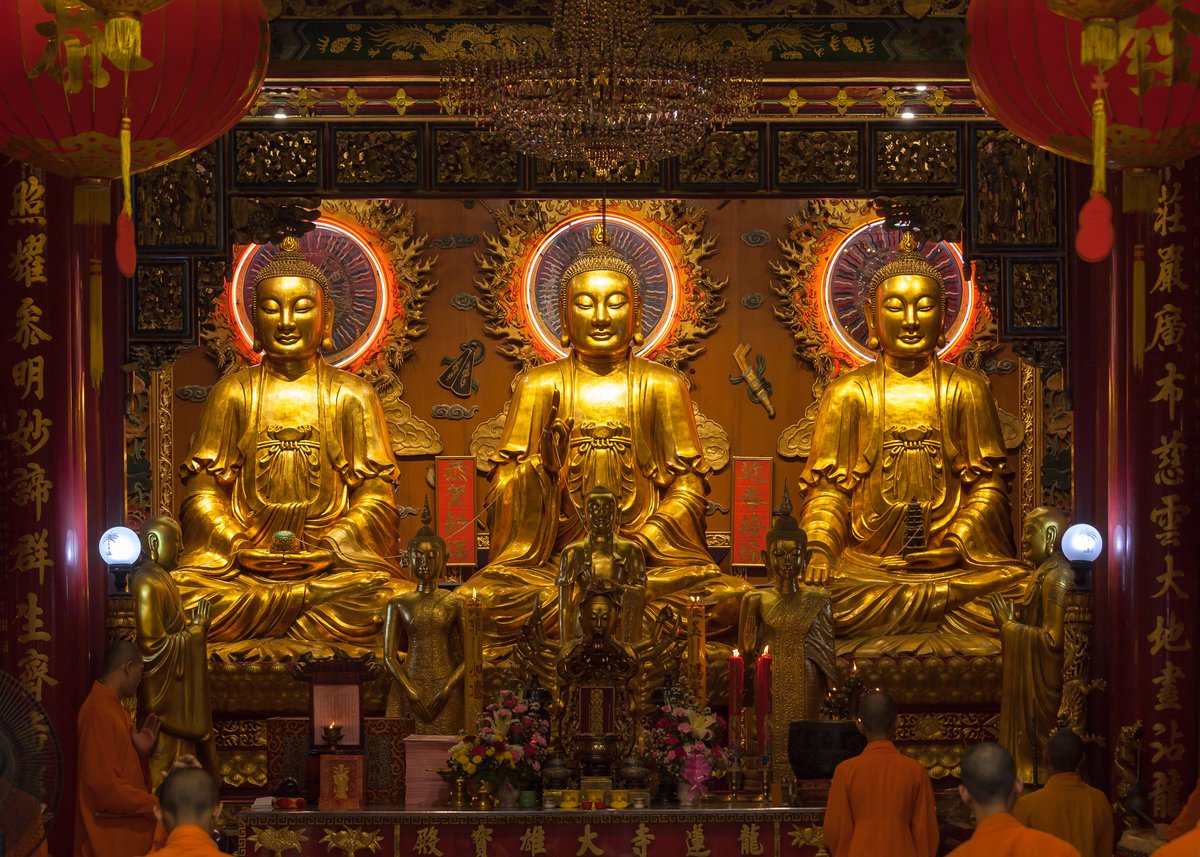
The main hall at Wat Mangkon Kamalawat, also known as Wat Leng Noei Yi.
Sampheng Lane
Sampheng is a narrow lane packed with wholesale shops selling fabric, toys, shoes, watches, jewellery and almost anything else you could sell by the dozen. The Tourism Authority of Thailand describes it as roughly as wide as your outstretched arms, which is about right. It’s known for wholesale prices and everyday goods, so it’s a good place to browse, but not a place to stop suddenly with a backpack on. It’s at its best in the daytime.
The Chinatown Gate and the Golden Buddha
At the eastern end of Yaowarat Road, the Chinatown Gate stands on Odeon Circle. It was built in 1999 to mark King Rama IX’s 72nd birthday, and its official name is the Chaloem Phra Kiat Gate.
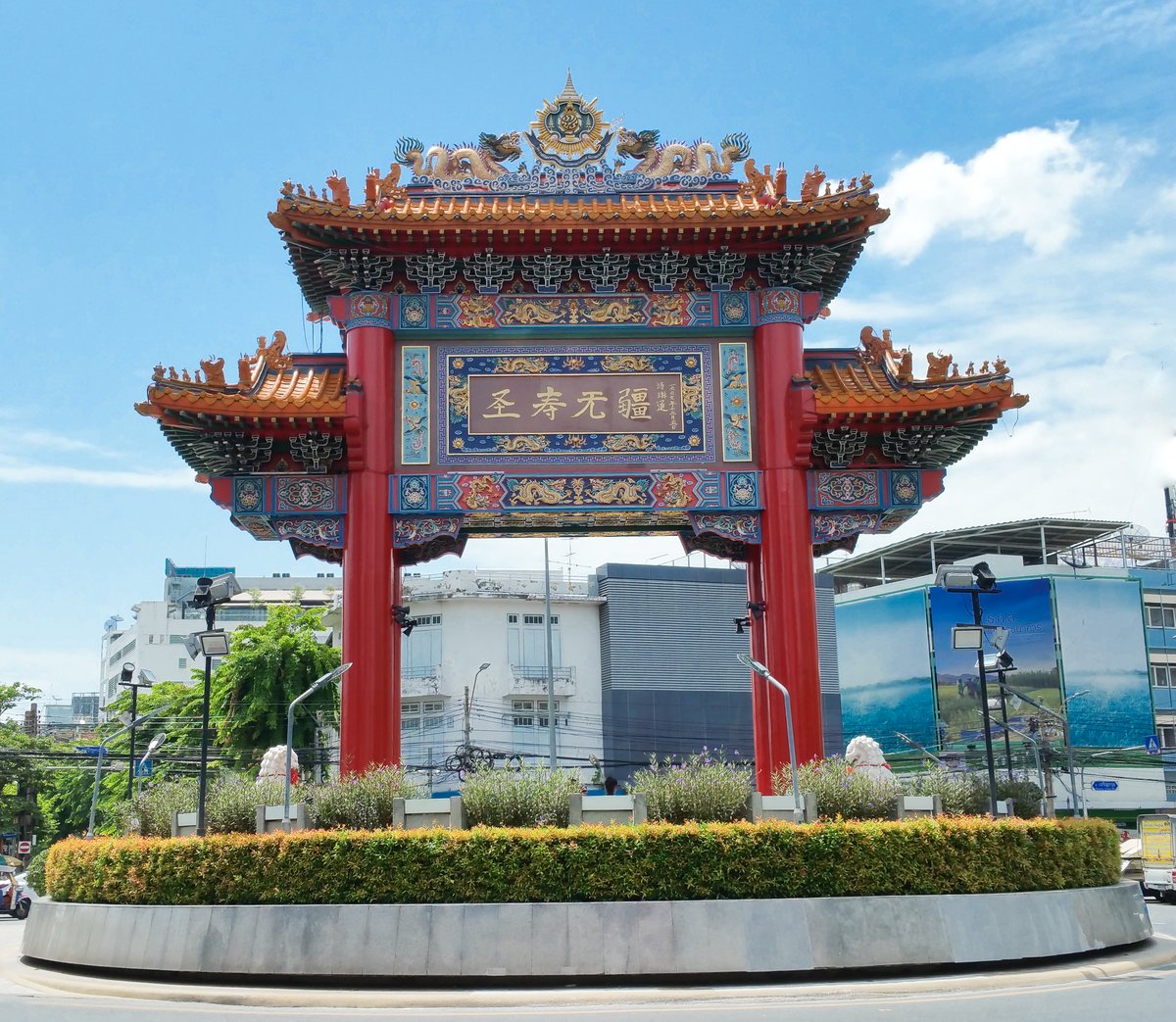
The Chinatown Gate on Odeon Circle, at the eastern end of Yaowarat Road.
Wat Traimit, วัดไตรมิตร (wát dtrai mít), is a few minutes’ walk away, and it’s home to the world’s largest solid gold statue. If you’d like to visit, check out our foreigner’s guide to Bangkok’s Golden Buddha.
Gold Shops and the Quieter Streets
You’ll notice the gold shops straight away, with their bright signs and glass counters, especially along the main road. If you’d like to see more than one road, head towards the river, where Song Wat and Talat Noi have older warehouses, shrines and much quieter lanes.
What People Come to Eat
Most visitors come for the food, and it’s mainly Chinese-Thai. Look out for egg noodles, บะหมี่ (bamìi), roast duck and red pork over rice, dim sum, seafood cooked in a hot wok, and ก๋วยจั๊บ (gǔaijáp), a peppery soup of rolled rice noodles. In the morning you’ll find deep-fried dough sticks, ปาท่องโก๋ (bpaatɔ̂nggǒo), and in the daytime the shops are full of dried goods, tea and fruit.
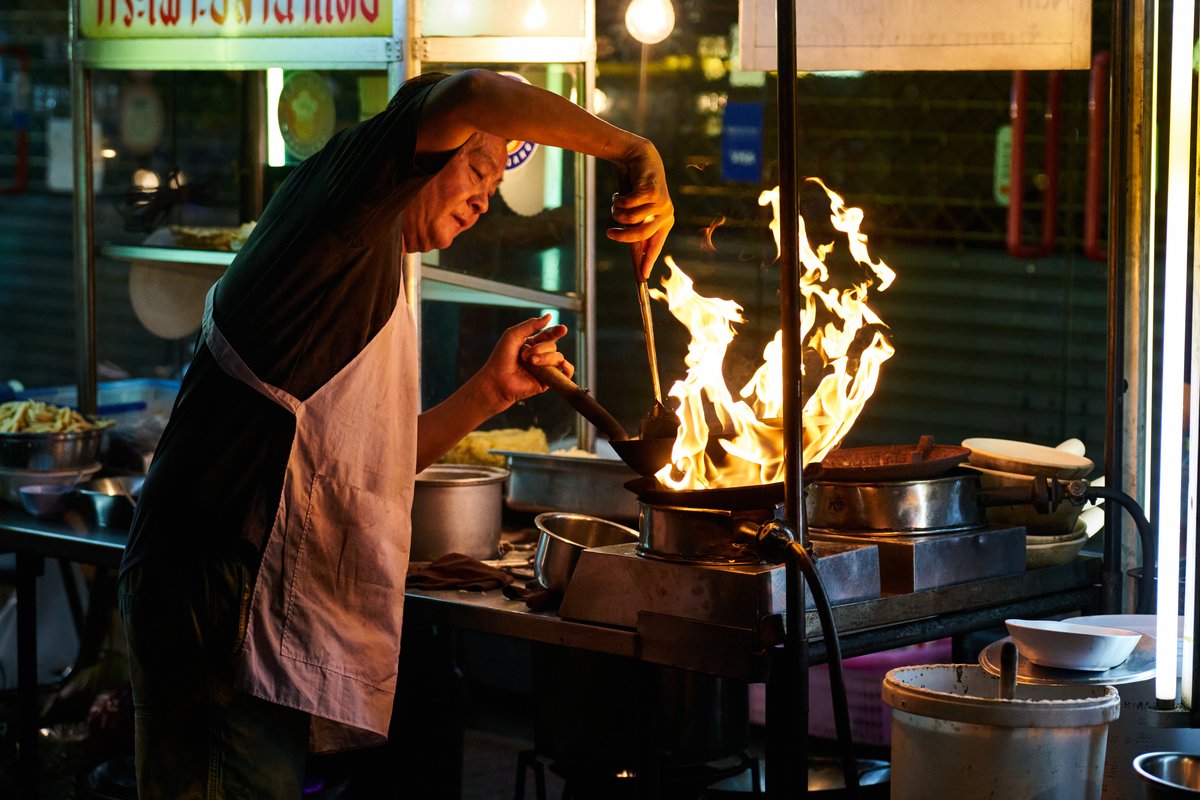
A cook at a wok stall in Bangkok’s Chinatown.
Go hungry, share plates, and expect queues at the famous stalls. Some tourist-facing stalls charge more than neighbourhood ones, so look for a price board or ask before you order.
When to Go, and How to Get There
The easiest way into Yaowarat is the MRT Blue Line. Plan on two very different visits in one, because the district changes completely between the daytime shops and the evening food stalls.
Getting There
MRT Wat Mangkon, which opened in 2019, is in the middle of Chinatown on Charoen Krung Road, next to Wat Mangkon Kamalawat. MRT Hua Lamphong is better if you want to start at the Chinatown Gate and Wat Traimit and walk west. From the riverside, the Chao Phraya Express Boat stops at Ratchawong pier, and it’s a short walk up Ratchawong Road to Yaowarat. Avoid driving in the evening or during festivals. Traffic on Yaowarat Road crawls, and walking the last kilometre is often quicker.
Day or Night?
Daytime is better for temples, gold shops and Sampheng. The food stalls set up from late afternoon, and the main road turns into a street-food strip after dark. A weekday early evening is usually kinder than a weekend crush, and many guides say lots of street stalls take Mondays off, so check before you plan around a particular one.
Visiting Wat Traimit too? Go in the late afternoon. The temple usually closes before the stalls get going, so you can walk straight on to dinner.
Festival Time
Chinese New Year, ตรุษจีน (dtrùt jiin), and the vegetarian festival, กินเจ (gin jee), are when Yaowarat is at its busiest, with decorations, lion dances, road closures and very large crowds. Both follow the lunar calendar, so the dates move every year. During the vegetarian festival you’ll see yellow flags on food stalls up and down the road, and our explainer on Bangkok’s yellow flags tells you what they mean. Check that year’s dates and any transport notices before you go.
Thai Words for a Walk Through Yaowarat
A few short Thai words will help you find your way, ask a price and order food. You don’t need a speech, and a smile does a lot of the work.
The marks on the romanisation show each syllable’s tone, and our beginner’s guide to Thai pronunciation explains how they work. To sound polite, men end a sentence with ครับ (kráp). Women end a statement with ค่ะ (kâ) and a question with คะ (ká). For more on asking nicely, check out our guide to being polite in Thai.
| Thai | Romanisation | English | When to Use It |
|---|---|---|---|
| เยาวราช | yaowarâat | Yaowarat, Bangkok’s Chinatown | When you tell a taxi or motorbike driver where you’re going, or look for the name on a sign. Say ไปเยาวราชครับ / ค่ะ (bpai yaowarâat kráp / kâ), which means “to Yaowarat, please”. |
| สำเพ็ง | sǎmpeng | Sampheng, the old market lane | When you ask for the wholesale lane. It’s signed Soi Wanit 1, but everyone says sǎmpeng. |
| วัดมังกร | wát manggɔɔn | Wat Mangkon | When you ask for the Chinese temple, or for the MRT station with the same name. |
| ร้านทอง | ráan tɔɔng | gold shop | When you’re using the gold shops as landmarks, or asking someone to meet you outside one. |
| เท่าไหร่ | tâorài | how much? | When there’s no price board. Point at the item and add kráp or ká. |
| ลดได้ไหม | lót dâai mái | can you lower the price? | When you’re buying several things at a shop in Sampheng. Smile and add kráp or ká. Don’t haggle over a bowl of noodles. |
| ถ่ายรูปได้ไหม | tàai rûup dâai mái | can I take a photo? | Before you photograph a stallholder, a shop or the inside of a temple hall. Add kráp or ká. |
| เจ๊ | jée | older sister (Chinese-Thai) | When you want to get the attention of a woman running a stall or shop, especially one a little older than you. |
| บะหมี่ | bamìi | egg noodles | When you order at a noodle stall and want the yellow egg noodles rather than rice noodles. |
| เป็ดย่าง | bpèt yâang | roast duck | When you see the ducks hanging in a shop window and want some, over rice or noodles. |
| อร่อย | arɔ̀i | delicious | When you’ve finished eating and want to thank the cook. Add kráp or kâ. |
| ห้องน้ำอยู่ที่ไหน | hông náam yùu tîinǎi | where’s the toilet? | When you need one, which on a long food walk you will. Add kráp or ká. |
Words like these turn a busy street into a place you can actually talk to. DLS has taught Thai in Bangkok since 2013, with a focus on the Thai people use every day. If you’d like to learn more of it, have a look at our Thai courses, or try private Thai lessons if you’d rather go at your own pace.
Frequently Asked Questions About Yaowarat
Is Bangkok’s Chinatown the Biggest in the World?
Yaowarat, Bangkok’s Chinatown, is often described as one of the largest Chinatowns in the world, but there is no official global ranking, so it’s fairer to call it one of the largest and most important than the biggest. Binondo in Manila, founded in 1594, is widely recognised as the oldest.
Where Is Yaowarat, and How Do I Get There?
Yaowarat Road is the main street of Bangkok’s Chinatown, in Samphanthawong district near the Chao Phraya River. The easiest way in is the MRT Blue Line to Wat Mangkon, or to Hua Lamphong if you want to start at the Chinatown Gate and Wat Traimit.
What Is Yaowarat Famous For?
Yaowarat is famous for Chinese-Thai street food after dark, gold shops, the old market lane of Sampheng, and temples such as Wat Mangkon Kamalawat, with Wat Traimit and the Golden Buddha at its eastern edge.
When Is the Best Time to Visit Bangkok’s Chinatown?
Visit in the daytime for temples, shops and Sampheng, and stay into the evening for the street-food stalls. Chinese New Year and the vegetarian festival are the busiest times, and their dates change every year, so check before you go.
What Is Yaowarat Called in Thai?
The usual Thai name for Bangkok’s Chinatown is เยาวราช (yaowarâat), after its main road. People also say ไชน่าทาวน์, and the district that covers most of it is สัมพันธวงศ์, Samphanthawong.
Sources and Further Reading
The facts in this article were checked against the sources below in November 2026. Opening hours, festival dates and stalls change, so please check before you visit.
Tourism Authority of Thailand on the New MRT Stations
The 2019 TAT Newsroom guide to MRT Wat Mangkon and Hua Lamphong, with Wat Mangkon Kamalawat, Sampheng Lane, evening food on Yaowarat Road, and the 1999 Chinatown Gate.
Tourism Authority of Thailand on Chinese New Year
TAT’s 2014 Chinese New Year announcement, which describes Yaowarat Road as “one of the world’s largest Chinatowns”. This is the public copy carried by Pattaya Mail.
National Statistical Office of Thailand
Bulletin of Statistics, Quarter 2, 2024, Table 1.3, with the registered population of each Bangkok district in 2023, including Samphanthawong.
Wikipedia on Chinatown, Yaowarat Road and Wat Mangkon
Background on the 1782 move to Sampheng, the growth of the district, the building of Yaowarat Road, Samphanthawong’s area, the founding of Wat Mangkon Kamalawat, and Binondo’s founding in 1594. Much of the history draws on Edward Van Roy’s book Siamese Melting Pot (2017).
Read about Chinatown, Bangkok, Yaowarat Road, Samphanthawong district, Wat Mangkon Kamalawat and Binondo
A Visitor Guide for 2026
A recent visitor guide covering Ratchawong pier, evening stall times and the Monday closures many street stalls take.
Further Reading From DLS
If you’re planning a day in Chinatown, or want more of the Thai behind it, these articles are a good next step.
A Foreigner’s Guide to Bangkok’s Golden Buddha
The solid gold Buddha at the eastern edge of Chinatown, how it was found, and how to visit Wat Traimit.
Chinese Influence in Thailand: Food, Words and Everyday Life
Who the Thai-Chinese are, and the everyday Thai words and dishes that came from Chinese.
Why Bangkok’s Yellow Flags Mean More Than “Vegan Week” (เจ Explained)
What the yellow flags on Yaowarat’s food stalls are telling you during the vegetarian festival.
Pad Thai (ผัดไทย): Meaning, Origin, and How to Order It in Thai
Thailand’s best-known noodle dish, and how to order it the way you like it.
Thai Pronunciation for Beginners: Tones, Vowels and Sounds You Need to Speak Clearly
The tones and sounds behind every word in the table above, explained from the start.
Banner photo: “แสงไฟหลังฝน” by Thanaporn Sorrawitsakul, CC BY-SA 4.0, via Wikimedia Commons, cropped.
Photo: “Chinatown Gate, Bangkok” by Photogoddle, CC BY-SA 4.0, via Wikimedia Commons.
Photo: “The Three Buddhas, Wat Leng Noei Yi” by Supanut Arunoprayote, CC BY 4.0, via Wikimedia Commons.
Photo: “Bangkok Street Food” by Radek Kucharski, CC BY 2.0, via Wikimedia Commons.